High TG and Standard TG FR4 PCBs How to Make the Best Choice
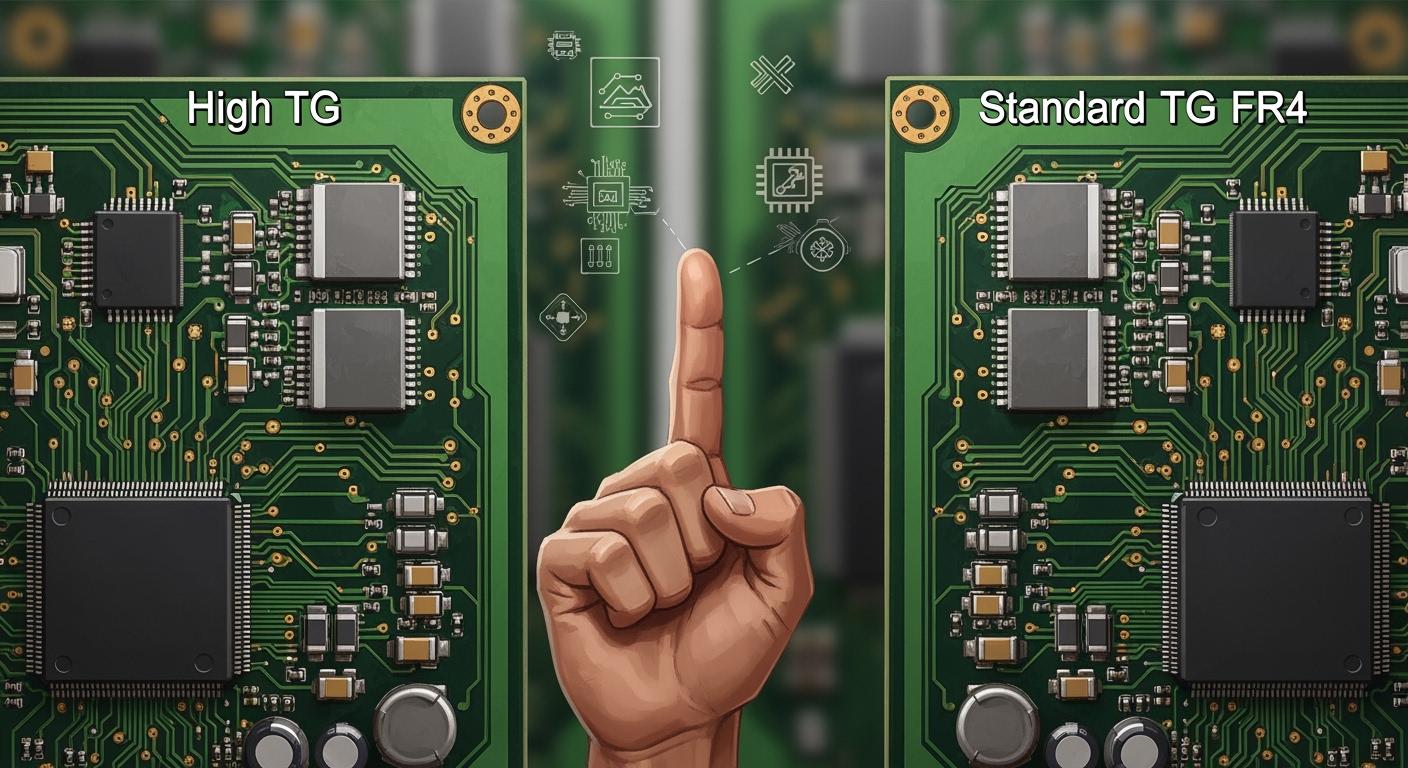
You have an important choice when picking a pcb for your project. The TG value shows how much heat your pcb can take before it gets soft. If your project gets hot or needs strong support, a pcb with a high TG value is better. It stays stable and keeps its shape even when it's hot. But, this choice can cost more at first. A standard fr-4 pcb works well for moderate heat and simple designs. However, using a pcb close to its TG can cause it to fail early. Think about the benefits of High TG vs Standard TG carefully. This will help you match your pcb to your needs, budget, and environment.
Key Takeaways
Learn about TG values. TG shows how much heat a PCB can take before it gets soft. Pick a PCB with high TG if your project makes a lot of heat.
Choose the best PCB for your project. High TG PCBs work well in tough places like cars or planes. Standard FR4 is good for normal electronics that do not get hot.
Think about cost and performance. High TG PCBs cost more but last longer and handle heat better. Compare the benefits to your budget before you decide.
Look at how your PCB will be used. Always check the highest temperature and stress your PCB will face. This helps you pick a material that will last.
Plan your design with care. For high TG PCBs, use ways to spread heat like thermal vias. This stops heat from building up in one spot.
TG Explained in FR4 PCBs
What Is TG
You see tg a lot when you check fr4 pcb materials. TG means glass transition temperature. It tells you when the fr4 in your pcb goes from hard to soft. When the pcb gets hot and hits tg, it starts to bend and lose strength. You can find tg by using tests like Differential Scanning Calorimetry (DSC) or Dynamic Mechanical Analysis (DMA).
Here is a table that shows the usual glass transition temperature for different fr4 pcb materials:
Material Type | Glass Transition (Tg) |
|---|---|
Standard FR4 | 130–140°C |
High Tg FR4 | 170–180°C+ |
You need to know the tg of your fr4 pcb. It helps you see how your board will handle heat. If your pcb runs near or over its tg, it can get soft and lose shape.
Why TG Matters
TG is important for how well your fr4 pcb works. If you keep the temperature below tg, your pcb stays strong. If the temperature goes above tg, the fr4 gets rubbery. This can cause problems like bending, layers coming apart, or broken circuits.
Tg is very important when picking pcb material. It shows how much weight and heat the material can handle. If the temperature is at or below tg, the material stays strong under stress. If the temperature goes over tg, the material gets soft and can bend. This can lead to layers coming apart and broken tracks.
Pick a high tg fr4 pcb if your design will get hot or carry heavy loads. High tg materials help your pcb stay strong and keep its shape. This matters for things like cars or planes, where the glass transition temperature must be high to stop failure. Standard fr4 is good for most simple electronics, but always check the tg to make sure your pcb will last.
Standard FR4 PCB Overview
TG Range and Properties
You often see standard fr4 used in many pcb projects. Standard fr4 has a tg range between 130°C and 140°C. This tg value means your pcb will stay hard and stable until it reaches this temperature. When you use standard fr4, you get a material that resists heat up to its tg. If your pcb stays below this tg, it keeps its shape and strength. Standard fr4 also gives you good electrical insulation and mechanical support. You can trust standard fr4 to handle most daily electronics without problems.
Note: If your pcb gets close to the tg of standard fr4, you may see bending or warping. Always check the highest temperature your pcb will face.
Standard fr4 works well for single-layer and double-layer pcb designs. The material is easy to cut and drill. You can solder parts onto standard fr4 without much trouble. The cost of standard fr4 is lower than high tg materials, so you save money on your pcb project.
Typical Uses
You find standard fr4 in many common pcb applications. Here are some examples:
Consumer electronics like TVs, radios, and remote controls
LED lighting boards
Computer peripherals such as keyboards and mice
Simple power supplies
Home appliances
Standard fr4 fits best when your pcb does not face high heat or heavy loads. You can use standard fr4 for prototypes and low-cost products. Many schools and hobbyists pick standard fr4 for learning and small projects. If you want a reliable pcb for normal use, standard fr4 is a smart choice.
Tip: Always match the tg of your standard fr4 to the needs of your pcb. If your design stays cool, standard fr4 will last a long time.
High TG PCBs Overview
TG Range and Properties
Sometimes, your pcb needs to work in hard places. High tg pcbs use fr4 with a tg of 170°C or more. This means they stay strong when it gets hot. High tg pcbs keep their shape and work well even if the temperature goes up. Here are some important things about high tg pcbs:
High tg pcbs have a tg of at least 170°C.
These pcbs do not bend or twist when it is hot.
High tg pcbs are stronger and more stable than standard ones.
They protect circuits from heat damage.
You can use them for multilayer designs that need more support.
High tg pcbs stop layers from coming apart and tracks from breaking.
The fr4 in these pcbs stays strong under stress.
You see high tg pcbs where heat performance is important.
High tg pcbs last longer in tough places.
They are good for advanced electronics that get very hot.
Tip: If your pcb needs to handle lots of power or fast signals, high tg pcbs give you better safety and work better.
Typical Uses
High tg pcbs are used in many different fields. These pcbs work well where there is a lot of heat or stress. The fr4 in high tg pcbs helps them last in hard jobs. Here is a table that shows where high tg pcbs are used and what products need them:
Industry | Product Types |
|---|---|
Automotive Electronics | Engine control units, infotainment systems, safety features |
Aerospace and Defense Systems | Avionics, satellites, missile systems |
Industrial Equipment | Manufacturing machinery, control systems |
High-Power Electronics | Power converters, motor drives, inverters, renewable energy systems |
LED Lighting Modules | LED modules for consistent brightness and reliability |
Telecommunications Equipment | Base stations, networking equipment |
Oil and Gas Electronics | Sensor control, data logging, monitoring systems |
Medical Devices | Diagnostic equipment, imaging systems, patient monitors |
Consumer Electronics | Laptops, smartphones, tablets |
Renewable Energy Systems | Solar inverters, wind power systems |
Electronic Testing Instruments | Test and measurement equipment for laboratories and industrial settings |
You find high tg pcbs in cars, planes, factories, and hospitals. These pcbs help your devices stay safe and work well. If your pcb must last in a hot or hard place, high tg pcbs are the best pick.
High TG vs Standard TG FR4
Thermal Performance
You should think about heat when picking between high tg and standard tg fr4. High tg pcb materials are made for places where heat is a big problem. These boards keep their shape and electrical properties even when the temperature goes above 170°C. Standard fr4 pcb starts to soften at 130-140°C. If your pcb faces high heat, high tg pcb will protect your circuits and keep your board strong.
High tg pcb stays stable at high temperatures.
Standard fr4 pcb can bend or lose strength if the heat gets close to its tg.
High tg pcb gives you better thermal management for demanding jobs.
You get high reliability with high tg pcb in hot environments.
High tg vs standard tg matters most when your pcb must survive heat. High tg pcb helps you avoid failures from overheating.
Mechanical Strength
Mechanical strength is important when you compare high tg and standard tg. High tg pcb uses special fr4 resin systems that make the board tough. These boards resist bending, twisting, and warping. Standard fr4 pcb works well for simple jobs, but it can lose strength if the temperature rises. High tg pcb keeps layers together and stops microcracks from forming.
High tg pcb has strong interlayer adhesion.
High tg pcb resists mechanical stress and humidity.
Standard fr4 pcb is good for light loads and cool places.
High tg pcb gives you high-performance and high reliability for heavy-duty jobs.
If you need your pcb to last in tough places, high tg pcb is the best choice for reliability.
Cost Differences
Cost is important when you compare high tg and standard tg. High tg pcb materials cost more because they use upgraded resin and tighter controls. Standard fr4 pcb is cheaper and fits cost-sensitive projects. You pay more for high tg pcb, but you get better thermal management and reliability.
Type of PCB | Base Price (per sq. ft) | Cost Difference |
|---|---|---|
Standard TG | $5–$8 | N/A |
High TG | $7–$12 | 30–50% higher |
High tg pcb is more expensive than standard fr4 pcb.
Standard fr4 pcb is best for simple, low-cost products.
High tg pcb is worth the price for high-performance and high reliability.
You should balance cost with the needs of your pcb. High tg pcb is a smart investment for demanding jobs.
Processing Requirements
Processing requirements change when you compare high tg and standard tg. High tg pcb uses fr4 sheets with special resin systems. These resins have extra cross-linking agents for better heat resistance. High tg pcb can handle repeated thermal cycles and soldering without damage. Standard fr4 pcb is easier to process but does not last as long in tough environments.
High tg pcb reduces thermal stress and stops solder joint fatigue.
High tg pcb resists warping and keeps layers together.
High tg pcb lasts longer in places like cars and planes.
Standard fr4 pcb is easy to cut and drill for simple designs.
High tg pcb gives you better thermal management and reliability during manufacturing and use.
Summary Table: High TG vs Standard TG FR4
Feature | Standard TG FR4 PCB | High TG FR4 PCB |
|---|---|---|
TG Range | 130–150°C | >180°C |
Thermal Performance | Moderate | Superior |
Mechanical Strength | Good for light loads | Excellent for heavy loads |
Cost | Lower | 30–50% higher |
Processing | Simple | Needs advanced resin systems |
Reliability | Good for basic jobs | High reliability in tough jobs |
Thermal Management | Basic | Advanced |
Application Scenarios | Consumer electronics | Automotive, aerospace, power |
When you compare high tg and standard tg, you see high tg pcb gives you better thermal performance, mechanical strength, and reliability. Standard fr4 pcb is best for simple, low-cost jobs. High tg pcb is the right pick for high-performance and high reliability in tough environments.
When to Choose High TG or Standard FR4
High TG Application Scenarios
You should choose a high TG pcb when your project faces tough conditions. High TG fr4 works best in high temperature environments, where regular boards might fail. You need this material for high power applications, fast signal speeds, or when your pcb has many layers. High TG fr4 gives you reliable performance and keeps your board strong, even when things get hot or stressful.
Here are some guidelines to help you decide if you need high TG fr4:
Check the Operating Environment: Look at the highest temperature and stress your pcb will face. If your board will be near engines, inside factories, or in outdoor gear, you need a higher TG value.
Think About Performance Needs: If your pcb must handle lots of power, fast signals, or tight spaces, high TG fr4 will help. It keeps your circuits safe and stable.
Balance Cost and Benefits: High TG fr4 costs more, but it gives you better safety and longer life. Use it when your project cannot risk failure.
Pick the Right TG Value: For most consumer electronics, a TG of 140°C works. For cars, planes, or advanced devices, you need TG 170°C or higher.
Follow Industry Rules: Some jobs, like medical or automotive, need special TG values. Always check the rules for your field.
You should also use high TG fr4 for multilayer or high-density pcb designs. These boards get hotter and need more support. High TG materials stop warping and keep all the layers together.
Tip: High TG fr4 is the best choice for projects that need to last in heat, stress, or high-tech jobs.
Standard FR4 Application Scenarios
Standard fr4 works well for simple and cool jobs. You can use this material for most home electronics, school projects, or low-power devices. If your pcb does not get very hot or carry heavy loads, standard fr4 will do the job.
Here are some times when standard fr4 is a good pick:
Your pcb stays below 130°C most of the time.
The design is single or double layer.
The board does not need to handle lots of power or fast signals.
You want to save money on your project.
The product is for learning, testing, or short-term use.
Standard fr4 is easy to work with and costs less. You can cut, drill, and solder parts without trouble. It gives you good support for most basic electronics.
Note: Always check the highest temperature your pcb will face. If you think it might get hot, move up to high TG fr4.
Practical Examples
You can see the difference between high TG and standard fr4 in real projects. Here is a table that shows when engineers picked high TG fr4 over standard fr4:
Project Type | Reason for High TG FR4 PCB Selection |
|---|---|
Power Module Boards | Standard fr4 bent during high-temperature tests. High TG pcb stayed flat and strong. |
Automotive Electronics | Needed to last in engine control units with high heat. |
Industrial Equipment Motor Drives | High TG boards gave better thermal stability for machines. |
Medical Device Project | Used high TG fr4 for strong support at high temperatures. |
5G Module | High TG pcb handled hotspots that standard boards could not. |
You should also use a checklist when you decide between high TG and standard fr4. This helps you pick the right pcb for your needs:
Checklist Item | Description |
|---|---|
Base Material (Laminate) | Use high TG fr4 for high temperature jobs. |
Comparative Tracking Index (CTI) | Pick a high CTI to stop electrical breakdown. |
Copper Weight | Choose thicker copper for boards that carry more current. |
Dielectric Thickness | Add more layers between high-voltage parts for safety. |
Surface Finish | Use finishes like ENIG for better performance. |
Solder Mask | Pick a solder mask that can handle heat. |
Via Structure | Use plugged and capped vias for better heat control. |
Dimensional Stability | Keep tight size limits for thermal jobs. |
Cleanliness | Make sure the board is very clean to avoid problems. |
Traceability | Mark boards for tracking and safety. |
IPC Class | Use IPC-6012 Class 3 for high-reliability jobs. |
Thermal Management | Check the heat transfer ability of the board. |
High TG fr4 is best for multilayer, high-density, or high power applications.
Standard fr4 is good for simple, low-cost, and low-heat jobs.
Remember: Always match your pcb material to your project’s needs. This gives you the best mix of cost, safety, and reliable performance.
PCB Design Tips for TG Selection
Optimizing for High TG
You can get the best results from your high TG pcb by following some smart design steps. High TG materials let your pcb handle more heat and stress, but you need to plan your design carefully. Here are some tips to help you:
Choose laminates that match your pcb’s highest working temperature. Check IPC-4101 specs to make sure you pick the right material.
Spread out heat-generating parts across your pcb. This helps keep the temperature even and stops hot spots.
Use thermal vias and copper pours to move heat away from sensitive areas. High TG pcb materials work well with these features.
Pick heavier copper weights if your pcb needs to carry more current.
Design your pcb stackup with balanced copper layers. This keeps your board flat and stops warping.
Protect your vias by filling them. This helps your pcb handle changes in temperature.
Test your pcb with thermal cycling before full production. This checks if your design can survive real-world stress.
Tip: Always write down the TG value you need in your pcb order. This helps your supplier give you the right material every time.
Working with Manufacturers
When you work with a manufacturer to build your high TG pcb, you may face some challenges. Knowing these can help you avoid problems and get a better board. Here is a table that shows common issues and what they mean:
Challenge | Explanation |
|---|---|
Delamination | Your pcb layers can come apart if the heat during processing is too high or if materials expand differently. |
Higher Costs | High TG pcb materials and longer processing steps cost more than standard boards. |
Processing Difficulties | The thicker resin in high TG pcb is harder to drill and plate, which can wear out tools faster. |
You should talk with your manufacturer early in your pcb project. Ask about their experience with high TG materials. Make sure they can meet your needs for temperature, copper weight, and layer count. Share your pcb drawings and TG requirements clearly. This helps avoid mistakes and keeps your project on track.
Note: Baking your pcb before assembly removes moisture and helps prevent problems during soldering.
You must pick a pcb with the right TG value for it to last a long time. High TG pcb is stronger and handles heat better. Low TG pcb can break more easily in hard places. Look at this table to see how TG value changes how your pcb works:
TG Value | Impact on Performance and Reliability |
|---|---|
High | Stays strong and handles heat better |
Low | More likely to break or stop working |
When you choose a pcb, think about what you need. Use facts and test samples before you decide. Do not forget to check how heat will affect your pcb. Do not just look at the price. Order your pcb early and talk to the people who make it. This helps you get the best pcb for your job. New ideas show high TG pcb is good for new tech and green products. Always think about cost, how well it works, and if it fits your needs.
FAQ
What does TG mean in a pcb?
TG stands for glass transition temperature. It shows the point where your pcb material changes from hard to soft. You should always check the TG value before you choose a pcb for your project.
When should you use a high TG pcb?
You should use a high TG pcb when your project faces high heat or stress. High TG materials help your pcb stay strong in cars, factories, or advanced electronics. This choice gives you better safety and longer life.
Can you use standard pcb for multilayer designs?
You can use standard pcb for simple multilayer designs. If your pcb has many layers or faces high heat, you should pick a high TG pcb. This helps prevent warping and keeps your board stable.
Does a high TG pcb cost more?
A high TG pcb costs more than a standard one. You pay extra for better heat resistance and strength. If your pcb needs to last in tough places, the higher cost is worth it.
How do you pick the right pcb for your project?
You should look at your pcb’s working temperature, power needs, and design. If your pcb stays cool and simple, standard works. If your pcb gets hot or has many layers, choose high TG. Always match the pcb to your needs.
See Also
Enhanced Performance of High TG FR4 PCBs in Harsh Conditions
Integrating Rogers Material with TG170 for Hybrid PCB Solutions
Comprehensive Guide to Manufacturing Heavy Copper Multilayer PCBs
Top Material Choices for Designing High-Speed PCBs Effectively
Selecting a Reliable PCB Manufacturer for Your Business Needs
