The Essentials of PCB Batch Quality Tracking
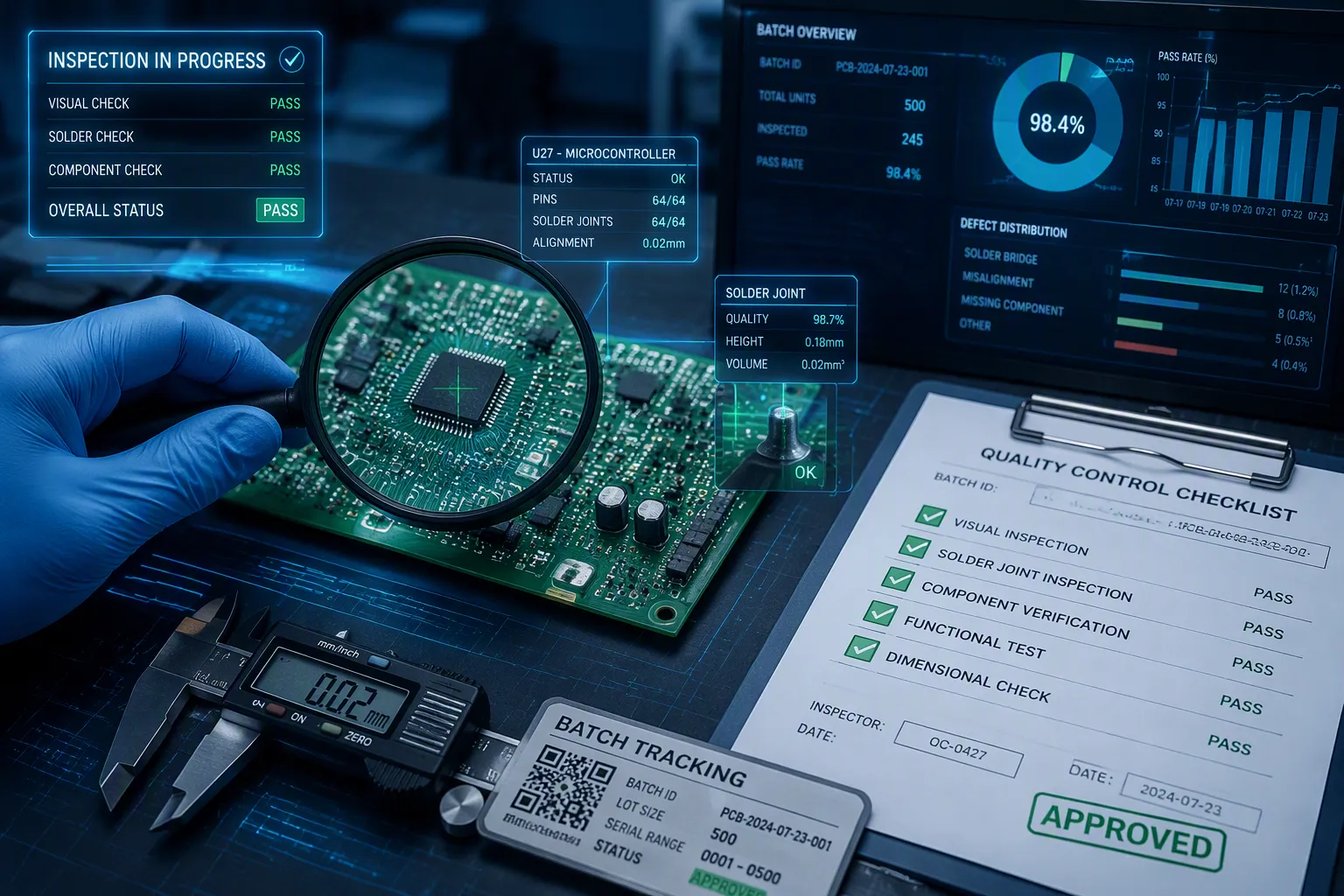
One bad chip forced a recall of 8,000 products. The maker listed the faulty part as an 'alternative' rather than an 'equivalent', so they didn't know which groups used it. This missing info caused a huge testing job. Checking by hand would take 80 days. A quicker test cut time to 60 seconds per item. This shows why tracking in pcb making matters. How can you make sure every group meets quality rules? Pcb batch quality tracking gives the answer. It links groups to parts and steps, ensuring safety and rule-following. Fields like aerospace, defense, and medical need this tracking. Strong building depends on it. Without this system, you face recalls and lost trust.
Key Takeaways
Track every PCB batch to avoid costly recalls and keep customers' trust.
Use barcodes, QR codes, or RFID tags to link each board to its materials and steps.
Follow standards like IPC-1782 and AS9100 to meet industry rules for quality.
Start with simple tools and add more as you grow to build a full traceability system.
Traceability helps you find and fix problems fast, saving time and money.
Defining PCB Batch Quality and Traceability
What Constitutes a Batch in PCB Production?
A batch in PCB production is a group of boards made the same way. Each batch gets a unique lot number. This number lets you track all linked materials, steps, and check records.
Industry rules set batch sizes with clear limits. A small batch covers 5 to 50 square meters of board area. The unit count usually falls between 50 and 1,000 units. Some makers use a tighter range of 50 to 500 units. These rules help you sort production runs the same way every time.
Your batch choice changes your cost structure directly. Fixed setup costs spread over fewer pieces, so each unit costs more. Factories focus on fast setup and use standard panel sizes. They offer lead times as short as a few days.
Without clear batch rules, you cannot manage pcb batch quality well. You need exact records for materials, steps, and check results. Your records build the base for traceability in pcb manufacturing.
The Role of Traceability in Quality Assurance
Traceability in pcb manufacturing links each batch to its materials, steps, and check results. This link works as both a quality check and a business tool. You use traceability systems to follow every part and every build stage. Your data should cover every build detail.
Not having traceability costs a lot. Without it, you cannot find which assemblies are bad during a recall. You must recall all products broadly, which costs much more. You also cannot spot repeat failure patterns or supplier quality issues. This hurts your long-term reliability review. Your check records for each batch must be full and correct.
Beyond quality checks, traceability gives business insight. You get smart problem detection by watching build factors like heat, pressure, and cycle time. You can predict risks and boost yields ahead of time. You also improve stock plans by studying lot expiry and old parts. This cuts waste and improves cash flow. Check data supports your proof process.
Traceability systems support statistical process control. You find links between process conditions and results to improve build settings. You study supplier performance over time using part lot data. This gives part traceability to guide your supplier choices. When field failures happen, you rebuild build conditions to find root causes.
Pcb manufacturing traceability becomes vital for fields like aerospace, defense, and medical. Aerospace demands strict tracking. Defense needs very detailed records. Medical devices rely on full data. These fields require tight rule-following. Your compliance plan should include regular audits. You need lot-level and part-level tracking. Full traceability joins with your pcb batch quality records to become the one source of truth. This allows team-wide study of build costs and speed.
Key Technologies for PCB Manufacturing Traceability
You need good tools to build a trustworthy traceability system. Each tool has a specific job in your production line. Your choice depends on how much you make, how complex it is, and what your industry needs.
Barcode, RFID, and QR Code Systems
Barcode and QR code systems are the cheapest way to start traceability in PCB making. You print a unique code on each board or its holder. Your scanners read that code at every step. This works well for normal production runs where seeing the code is easy. A simple barcode label is inexpensive. QR codes hold more data than old barcodes, so you can put batch numbers, date codes, and part IDs directly on the label.
Radio-frequency identification (RFID) gives a different benefit. RFID tags send data without needing to see them. You can scan a whole stack of boards through packaging or boxes. This is useful for complex assemblies where parts block the barcode. RFID also lets you track where boards are in real time as they move through your factory. You know exactly where each batch is at any moment.
These automated tracking tools give clear benefits. When a single part fails, you can trace a PCB back to its exact production batch. This easy origin check lets you see if similar problems affect other units. Early defect detection works like a warning system, catching problems before they become big failures. You also improve quality by finding where faults start, so you can fine-tune the process and get better output every time.
Data Management and Lot Tracking Software
Hardware by itself cannot give full traceability. You need software to handle the data your scanners collect. Lot tracking software gives each batch a unique ID. It keeps detailed product info, like material lots, process settings, and inspection results. This digital record becomes your one true source for every board you make.
The speed of software-based traceability systems is clear during audits. You can finish a mock recall audit in under 30 minutes, which is 8 times faster than doing it by hand. You get full forward trace from raw material to end customer in minutes, not hours. Audit prep time goes from days of gathering papers to minutes for pulling records. You can generate complete product history reports for any batch or serial number in just minutes.
Your traceability systems also help you find risks early. You look at failure trends across batches to spot problems before they reach customers. You show regulators and customers that you follow the rules with correct, up-to-date records. This is very important for aerospace, defense, and medical makers who have strict paperwork needs.
Component traceability needs your tracking hardware and software to work together. You link each part's lot number to the specific boards that use it. This lets you track parts at the component level through your whole production process. When a supplier recalls a part, you can find exactly which finished products have those parts.
Modern lot tracking software works with your current ERP systems. This creates a smooth flow of data from order entry to final inspection. You get rid of separate data stores that break up your quality info. Your manufacturing team can see real-time batch status from any workstation. Your quality team can review inspection records without asking for paper documents.
The mix of scanning hardware and management software changes how you handle quality. You move from fixing problems after they happen to stopping them before they start. You build PCB manufacturing traceability into every step of your process. This investment pays off with lower recall costs, better customer trust, and stronger compliance.
For aerospace and defense contracts, tracking parts at the component level is a must. These industries need full visibility into every material and process. Medical device makers face similar demands from regulators. Your traceability systems must meet these strict standards to win and keep this business.
Navigating Standards and Regulations for Batch Quality
When you make PCBs for aerospace, defense, or medical use, you must follow certain rules. These rules explain what traceability means in real work. They shape how you handle quality. Knowing each rule helps you set up the right system for your products.
IPC, ISO, and AS9100 Requirements
IPC rules focus on how PCBs are made. IPC-1782 provides guidelines for traceability. It requires that customers and manufacturers define specific traceability parameters based on product risk, including what must be traced, the granularity (lot, panel, or individual unit), and records retention. Two common levels of traceability are lot-level and component-level, chosen based on product application.
For high-reliability industries such as aerospace, defense, and medical, standards often require component-level traceability. This ensures full visibility into which specific components are installed on each board, enabling precise recall containment and root cause analysis.
How Compliance Shapes Traceability Practices
Compliance requirements push better practices across your factory. These rules demand full records and reports ready for audits. They allow faster problem finding. Engineers can quickly spot issues in a certain batch of parts or a build step.
Your tracking system must support different detail levels. Lot-level tracking shows which material lots went into a batch. It cannot show the exact board where a part sits. Component-level tracking goes deeper. It links single parts to specific board serial numbers and reference designators. This helps with detailed problem finding. It allows recall control by isolating only affected units. It helps stop fake parts. Aerospace, defense, and implantable medical devices usually need component-level tracking. Aerospace contracts often list these needs.
You must keep full records for every batch. These records include material lots, date codes, component batches, and inspection results. Device history records become your proof of compliance. They let you trace back specific details when a customer asks. Your check records must cover every build stage. Your compliance papers must be ready for audits at all times. Quality checks at each check point feed into your records. Checks of solder joints and part placement happen at every stage.
Medical device production often requires component-level traceability under applicable standards to ensure patient safety. This ensures you can handle any field failure or recall fast.
Compliance shapes every choice you make about your system. It decides which technology you use. It defines how much data you collect. It sets your data storage times. It sets your report lead times. When you build your system around these rules, you create a base for quality and compliance that satisfies both regulators and customers. This method lowers risk in aerospace and defense work. It builds trust in medical production. It ensures you meet all tracking needs for aerospace and defense jobs.
Implementing a PCB Batch Quality System
Building a traceability system takes careful planning. You must link your tracking tools with your current systems. You also need to get your team ready for the change. The process includes several clear steps.
Steps to Build a Traceability Framework
Follow these steps to set up your traceability framework:
Deploy integrated ERP and MES platforms. These systems handle materials from start to finish. The platforms must share data so your records stay consistent.
Implement barcode-based material management. You connect lot numbers to production batches. Scanning the barcode ties the lot to the work order. This creates the first link in your traceability chain.
Automate BOM matching with revision locking. Your system checks the bill of materials against the parts you use. This step keeps your quality safe.
Link component data to PCB serial numbers. Your scanners read QR codes to attach component data to the exact board. This gives you board-level traceability.
Document production history records. Each critical IC traces back to its purchase order, supplier, lot number, and production batch. These records become your proof of quality.
These steps create a full traceability framework. You move from basic tracking to complete traceability. Your system captures data at every stage. This data supports your quality checks and compliance needs for aerospace, defense, and medical products. This is how pcb manufacturing traceability works in real life.
Your inspection records capture results at each stage. You record solder joint quality, part placement accuracy, and electrical test outcomes. These inspection records become part of your serialized manufacturing records. Each board has its own history. Your serialized traceability records link every component to the final product. This is component traceability at its best.
Your device history records tell the whole story. They show every material lot, every process step, and every inspection result. These records support your quality audits. They prove your compliance with standards like AS9100.
Overcoming Common Implementation Challenges
You will face several challenges when building your traceability systems. High initial costs are a common barrier. New software and hardware need investment. You also must train your staff. These costs can feel too much at first.
Phased rollouts help you handle costs. You start with one production line or one product family. You prove the system works before expanding. This approach spreads costs over time. It also lets your team learn step by step.
Data silos create another challenge. Different departments often use separate systems. Engineering uses one tool. Production uses another. Quality uses a third. These systems do not always share data. You need to connect them.
Cloud-based solutions help fix this problem. They link your systems through a single platform. Your API connections join MES data to ERP records. This closes the loop on actual start times, finish times, scrap, and downtime. Your next MRP run shows real conditions. You track on-hand, allocated, and available-to-promise by lot or serial. This stops shortages before a line stops.
Resistance to change is a third challenge. Your team may be used to paper-based processes. They may not trust new digital systems. Training by role and workflow helps overcome this. You train buyers and receivers on receipt and match workflows. You do not only train finance. You show each person how the system helps their work.
The payoff for overcoming these challenges is big. You get full traceability across your manufacturing process. Your records support quick audits and efficient recall management. Your quality improves as you find problems early. Your compliance with aerospace, defense, and medical standards becomes easier to prove. Your inspection records at each checkpoint feed into your system. You inspect solder joints, component placement, and electrical continuity. Each inspection point gives you a data point for quality tracking. You use inspection findings to improve your manufacturing process. Regular inspection data helps you meet aerospace requirements. The same inspection data supports medical device regulations. Medical production demands strict tracking for patient safety. Medical standards require detailed records. Component-level tracking gives you the deepest view into your products. Your traceability systems for aerospace and defense must meet strict standards. Cloud-based systems offer scalability for growing manufacturing operations. Aerospace contracts often require full lot traceability.
Your investment in this system pays back through lower recall costs and stronger customer trust. You build a system that grows with your business.
Pcb batch quality tracking makes sure products are reliable and follow rules. Traceability in pcb manufacturing is a smart business tool. It gives useful info and builds customer trust. Your traceability systems keep check records. These check results help you recall bad products fast. This full traceability meets aerospace and medical rules. Pcb making traceability is a must. Tracking parts for aerospace and defense needs strong quality records. Medical making needs strict step control. Full traceability protects your reputation. Check your current process now. Use scalable technology. Data-driven batch tracking will shape production. Smart analysis will prevent problems before they start. Detailed records support your quality goals.
FAQ
What is the difference between lot-level and component-level traceability?
Lot-level tracking tells you which material groups went into a batch. Component-level traceability goes deeper. It connects each part to a specific board number. Aerospace and defense jobs often need this deeper detail to find problems. This level of tracking helps your pcb batch quality goals.
How long must you keep traceability records?
Storage time depends on your standard. IPC-1782 Level 1 needs product life plus one year. Level 4 needs product life plus seven years. Medical and aerospace rules often ask for longer. AS9100 also sets strict paperwork rules. Check your contract before setting your policy.
What are the first steps to implement traceability in pcb manufacturing?
Start with integrated ERP and MES platforms. Then add barcode-based material management. Connect lot numbers to production batches. Automate BOM matching with revision locking. Then link component data to PCB serial numbers. This creates your full traceability chain for every step. Your quality records start here.
How does traceability help during a recall?
With proper tracking, you find only the affected units. You avoid recalling all products. You trace back to the exact material lot and batch. This cuts recall costs a lot. Your inspection records help find bad batches fast. Your quality team can act in minutes, not days. These systems become your safety net.
Do small manufacturers need full traceability systems?
Yes, if you work in aerospace, defense, or medical. These fields demand strict rules. Start with a phased rollout on one line. Cloud-based solutions are affordable and grow with you. You build your system as your business grows. Your inspection data becomes your quality proof. This investment pays off through fewer failures. Your manufacturing data helps you improve.
See Also
Achieving Excellence in PCB Production Quality Assurance
Understanding the Complete Workflow of Circuit Board Fabrication
Essential Skills for Designing Multi-Layer PCB Layouts
Key Phases for Rapid Turnkey Circuit Board Assembly
Seven Vital Checks for Heavy Copper PCB Assembly in Vehicles
