Rigid vs Flex vs Rigid-Flex PCB Design Differences
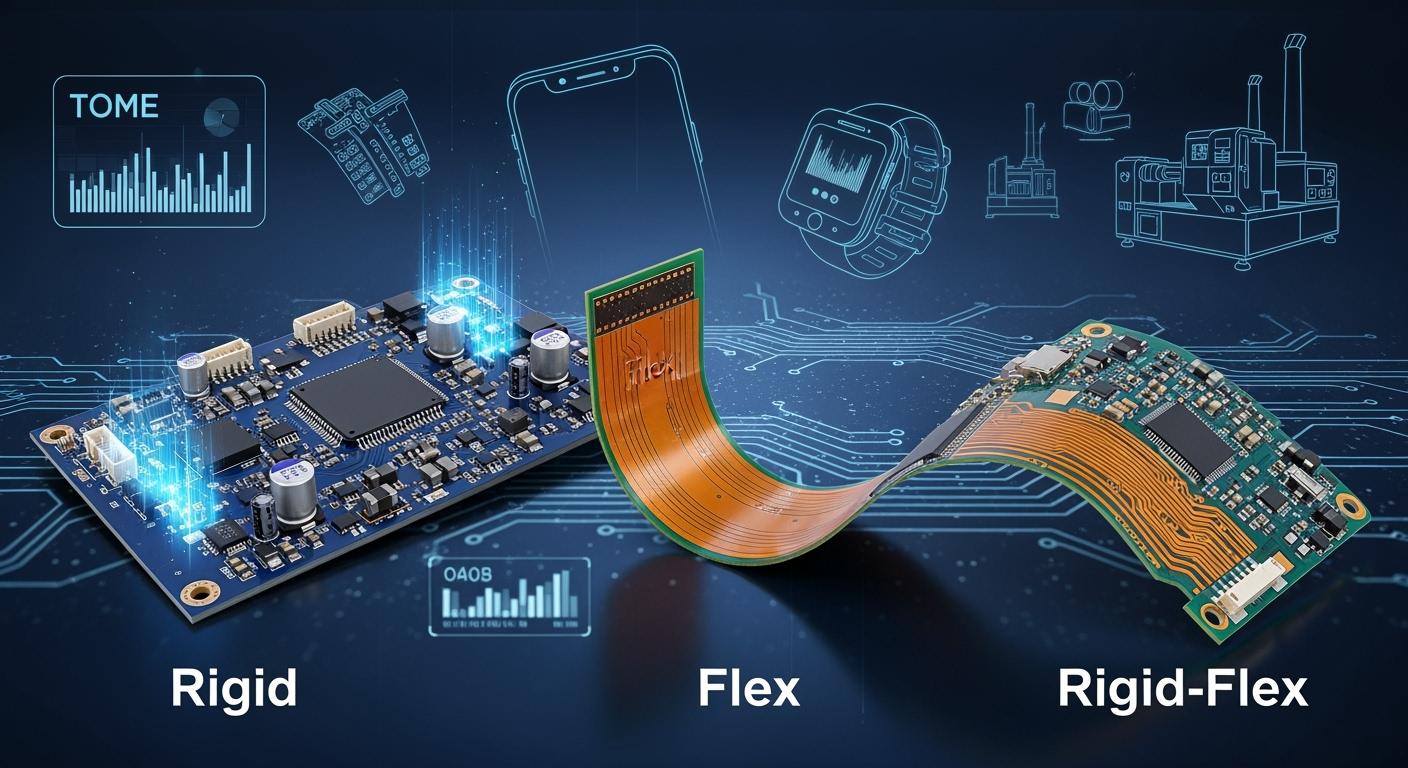
You should learn the main differences between rigid, flex, and rigid-flex PCB designs so you can choose the best one for your electronics project. A rigid pcb is hard and keeps electronics steady. A flex pcb can bend and fit in small spaces. Rigid-flex has both features and works for tricky shapes. These PCBs are used in things like smartphones, wearables, cars, medical tools, and airplanes. Knowing these differences helps you pick the right pcb for good and safe performance.
Key Takeaways
Rigid PCBs are strong and not expensive. They work well for steady things like computers and TVs. Flex PCBs are light and can bend easily. They are great for small spaces in things like wearables and medical tools. Rigid-flex PCBs mix the good parts of rigid and flex designs. They let you make cool shapes and use fewer connectors in new electronics. Picking the right PCB type depends on what your project needs. You should think about how tough, bendy, and cheap it should be. Always look at the material and what the PCB will do. This helps your PCB work well where you use it.
Key Differences: Rigid vs Flex vs Rigid-Flex
When you look at rigid, flex, and rigid-flex circuit boards, you notice they are built differently. They also bend in different ways and are used for different things. Each type of pcb has special advantages for your project. It is important to know these differences so you can pick the right one.
Rigid PCB Overview
A rigid pcb is hard and does not bend at all. You use it in things that need strong support and steady connections. Most rigid pcbs are made from FR-4 or ceramic. These materials make the board strong and keep the price low. Making rigid pcbs is not hard. You plate the board, add a solder mask, and print the silkscreen. Rigid pcbs are good for computers, TVs, and other things where the board stays still.
Rigid pcbs are cheap and work well for normal designs. They are strong and easy to put together.
Here is a table that shows the main materials and features:
PCB Type | Primary Materials Used | Key Properties |
|---|---|---|
Rigid PCBs | FR-4, Ceramic | High mechanical stability, cost-effective |
Flex PCB Overview
A flex pcb can bend and twist to fit small places. Polyimide or polyester films are used for the base. These materials make the board light and able to handle heat. Making flex pcbs needs extra care. You have to work with thin and bendy materials. Flex pcbs help connect parts inside devices. You can use them instead of big wires and ribbon cables. This saves money and space.
Flex pcbs are light and great for small designs.
You can make thin products and change the shape.
Flex pcbs are used in planes, medical tools, and gadgets.
PCB Type | Primary Materials Used | Key Properties |
|---|---|---|
Flex PCBs | Polyimide, Polyester | Flexible, lightweight, thermally stable |
Rigid-Flex PCB Overview
Rigid-flex pcb has both hard and bendy parts on one board. FR-4 is used for the hard parts and polyimide for the bendy parts. Making rigid-flex boards is tricky. You must line up and stick the layers together just right. Rigid-flex boards let you design in new ways and use fewer connectors. They are tough and work well in rough places.
Rigid-flex pcbs are important for jobs where things must work even when it is rough. They are good for places with lots of shaking, heat, or small spaces like pacemakers and hearing aids. You see them in the military, planes, medical tools, and cameras.
PCB Type | Primary Materials Used | Key Properties |
|---|---|---|
Rigid-Flex PCBs | FR-4, Polyimide | Combines rigidity and flexibility |
You use rigid-flex boards in foldable gadgets, high-tech electronics, and places where space and weight matter. Rigid-flex gives you both strength and the ability to bend. You can make cool shapes and use fewer steps to put things together.
Main Distinctions
Structure: Rigid pcbs are hard. Flex pcbs bend. Rigid-flex has both.
Flexibility: Rigid pcbs do not bend. Flex pcbs bend a lot. Rigid-flex bends in some spots and stays hard in others.
Use Cases: Rigid pcbs are for normal designs. Flex pcbs fit in tight or tricky places. Rigid-flex is for advanced electronics and tough places.
Type of PCB | Flexibility | Mechanical Properties | Cost Considerations |
|---|---|---|---|
Rigid-Flex PCB | Combines rigid and flexible sections | High durability, integrated structure, reduced connectors | Generally higher due to complex design |
Flex PCB with Rigidizer | Primarily flexible with added stiffness | Localized support, simpler structure | More cost-effective, less structural complexity |
You should compare flex, rigid, and rigid-flex to see what works best for your project. Rigid-flex lets you design in new ways and solve problems with space, weight, and strength. Rigid-flex boards help you make things that work well even in hard conditions.
Rigid PCB Construction and Materials
Layer Structure
You will find that a rigid pcb has a layered structure. Each layer has a special job. Most rigid boards have between 2 and 16 layers. Some advanced designs use even more layers. You can see these layers stacked together to carry signals and power.
The top and bottom layers hold the copper traces for signals.
Inner layers can carry more signals or act as power and ground planes.
Power and ground planes help keep voltages steady and reduce noise.
The board thickness usually ranges from 0.8 mm to 2.0 mm. Thicker boards give more strength or handle more current.
Dielectric layers and prepregs sit between copper layers. These materials control how signals move and keep the board stable.
You need to choose the right number of layers for your pcb. More layers help with complex circuits and high-speed signals.
Tip: Dedicated power and ground planes make your design more reliable and help with signal quality.
Material Choices
You have many options when you pick materials for a rigid pcb. The most common material is FR-4. This material gives good strength and works well for most electronics. You can also find special types for different needs.
FR-4 epoxy laminate is popular because it is strong and not expensive.
High-Tg FR-4 works better if your board gets hot during use.
Halogen-free FR-4 is safer for the environment.
High-frequency laminates, like Rogers or PTFE, are best for radio or microwave circuits.
FR-4 is the main choice for most rigid boards. It gives you a good mix of durability and performance. If you need your pcb to handle heat or special signals, you can pick other materials.
Note: The right material helps your pcb last longer and work better in tough conditions.
Flex PCB Design and Materials
Substrate and Bendability
You need to know what makes flex pcb work. The substrate is the bottom layer of a flex pcb. Polyimide is the most used substrate. It is very bendy and can take a lot of heat. You can use polyimide in many ways because it bends well and does not melt easily. Polyester (PET) is another choice. It costs less but cannot take as much heat as polyimide. You should not use polyester if your pcb needs to be soldered or will be in tough places.
Tip: Polyimide is best for flexible circuit boards that must bend a lot or get hot.
Here is a table that shows how polyimide and polyester are different:
Material | Maximum Temperature | Dielectric Strength | Cost |
|---|---|---|---|
Polyimide (Kapton) | 400°C | Excellent | Moderate |
Polyester (PET) | 120-150°C | Moderate | Low |
Polyimide gives you more ways to design your board. It lets you make shapes that fit in small spaces. You can count on polyimide for boards that need to move a lot. Polyester is good for simple and cheap electronics.
Polyimide: Bendy, strong, takes heat.
Polyester: Not as good with heat, works for cheap boards.
Flex PCB Construction
A flex pcb is made with layers of bendy stuff. Polyimide or polyester is used for the base. Copper foil is added for the circuits. You can have one, two, or many layers. More layers give you more ways to send signals and power.
Glue or special ways are used to hold the layers together. You can shape the flex pcb to fit your device. This way, the board stays bendy and strong. You can fold, twist, or bend it and it will not break.
Flex pcb uses polyimide or polyester to bend.
Rigid pcb uses FR-4 or ceramic to stay hard.
Rigid-flex pcb uses both for special designs.
Flex pcb lets you make things lighter and smaller. You can use fewer connectors and cables. Flex pcb helps you build things that fit in tight spots and move a lot.
Note: Flex pcb lets you make circuit boards that fit your needs. You can trust flex pcb to work well and last.
Rigid-Flex PCB Structure and Integration
Combined Layers
A rigid-flex pcb has both hard and bendy parts in one board. This design lets you connect parts that must stay still with parts that need to move. The hard parts hold heavy or fixed pieces. The bendy parts let you fold or twist the pcb to fit small spaces.
Rigid-flex pcbs use layers of flexible material with hard sections.
You get a board that can bend, fold, or twist as needed.
This helps you save space and use fewer connectors in your device.
Rigid-flex boards work well in things like wearables, IoT sensors, cars, and airplanes. These boards help you make products that are smaller and lighter.
When you build these boards, you can pick from different methods:
Traditional rigid-flex board construction
Short coverlay rigid-flex board construction
Hybrid laminate rigid-flex board construction
All rigid material rigid-flex board construction
Each method gives you a way to fit your project needs.
Symmetry and Impedance Control
You must keep the layers balanced when you design a rigid-flex pcb. Balanced layers stop the board from bending the wrong way. Good balance also keeps the board strong when you use it.
Impedance control is important for fast signals. You need to plan the layer stack and trace width so signals move smoothly. This helps your device work better and cuts down on noise.
Note: Rigid-flex boards connect the hard and bendy parts both electrically and mechanically. This is not the same as a flex circuit with stiffener, which only adds support and does not connect the layers electrically.
A flex circuit with stiffener uses extra material, like FR4 or polyimide, to make some spots stronger. These stiffeners help hold heavy parts or spread heat, but they do not connect circuits between the stiff and bendy parts. Rigid-flex designs let you use special features, like blind or buried vias, for more complex layouts.
You should pick a rigid-flex pcb if you need both strength and flexibility. This type of pcb helps you make reliable and small products that work in tough places.
Flex vs Rigid: Design Considerations
Layout and Routing
When you design a pcb, you need to plan the layout. Flex pcb lets you bend and fold the board. This helps it fit into small spaces. You must keep parts away from places that will bend. This stops damage and keeps the board safe. If you put parts in the wrong spot, they might break when the board bends.
You need to figure out the bend radius for your board layers.
Set the bend radius early so you do not hurt the board.
Keep vias at least 0.050" from where flex meets rigid. This helps stop cracks.
You also need to plan how you route the traces. Do not put traces where the board will bend a lot. Good routing helps the board stay cool and keeps signals strong. The materials you pick are important. Polyimide is best for flex layers. FR4 is used for rigid parts. Always use no-flow prepregs to keep resin out of the flex areas.
Tip: Flex pcb does not need connectors. This saves space and money. But you must use your space carefully.
Mechanical and Environmental Factors
You need to think about how the board will move and what it will face. Rigid parts make the board strong. Flex parts let it move and connect in new ways. This mix means fewer solder joints and connectors. That helps stop the board from breaking.
Pick materials that bend well but stay strong.
Make sure traces can bend without breaking.
Think about heat, wetness, and chemicals in your design.
Test your board to see if it works after bending many times.
Rigid pcbs are good for places with lots of stress and big temperature changes. These are things like cars or factories. Flex pcbs are good for wearables and things that move. Rigid-flex pcbs give you both strength and flexibility. They last longer and break less.
Note: Good design choices help your products last longer and work better in hard places.
Advantages and Disadvantages
Rigid PCB Pros and Cons
You will find that a rigid PCB gives you strong support for your electronic parts. This type of board works well for many designs because it is tough and cost-effective. You can make a lot of them quickly, which helps with big projects. The advantages of rigid PCBs include good durability and low cost. You also get less electronic noise and a compact design.
Advantages | Disadvantages |
|---|---|
Durable and cost-effective | Cannot be changed after making |
Can be made in large quantities easily | Rigid structure limits flexibility |
Handles high temperatures and stress | May fail in places with lots of vibration |
Good electrical performance | Not good for designs that need bending or flex |
Note: Rigid boards do not work well in places where you need the board to bend or move. Once you make the board, you cannot change it.
Flex PCB Pros and Cons
A flex PCB lets you fit your design into small or odd-shaped spaces. You can bend, fold, or twist the board to match your needs. The advantages of flex PCBs include saving space and making your device lighter. You can use fewer connectors, which helps with reliability.
Pros:
Bends to fit tight spaces
Makes products lighter
Reduces the need for connectors
Helps with creative design ideas
Cons:
Needs careful design to avoid breaking
More expensive to make than rigid boards
Harder to test and inspect
Must pick the right materials for best results
Tip: Always check the bend radius and material choice when you design with flex. This helps your PCB last longer and work better.
Rigid-Flex PCB Pros and Cons
Rigid-flex PCBs give you the best of both worlds. You get the strength of rigid sections and the flexibility of flex areas. This type of PCB works well for complex designs where you need both support and movement.
Pros | Cons |
|---|---|
Combines rigid and flex in one board | More costly than single-type boards |
Saves space and weight | |
Fewer connectors and solder joints | Manufacturing is more complex |
Good for tough environments | Longer lead times for production |
Note: Rigid-flex PCBs help you build reliable products for harsh places. You can use them in medical tools, cars, and wearables where space and strength matter.
Rigid-Flex PCB Applications and Use Cases
Space and Weight Savings
Rigid-flex is used when saving space and weight is important. It replaces wires and connectors with one board. This makes more room inside your device. You can add new features or make your device smaller. Rigid-flex does not make your device heavy. Your device stays light and easy to carry.
Rigid-flex removes extra connectors and wires.
Devices are lighter, so they are easier to carry.
In airplanes, every bit of weight matters. Rigid-flex helps planes and satellites weigh less. This can help save fuel.
Rigid-flex fits in small gadgets like phones and wearables. You do not lose any features.
Tip: Rigid-flex lets you make smaller and lighter products. You do not lose strength or reliability.
Complex and Compact Designs
Rigid-flex helps you build complicated and small designs. You can bend and fold the flex parts to fit tight spaces. The rigid parts give support where needed. This mix helps you make advanced electronics.
Wearables like fitness trackers and smartwatches use rigid-flex. They are small and fit well.
Medical devices like pacemakers and biosensors use rigid-flex. They fit inside the body and move easily.
Aerospace and defense gear use rigid-flex. It helps them handle shocks and stay reliable.
Cars use rigid-flex in dashboards and sensors. It fits in tight spots and handles shaking.
Phones and foldable screens use rigid-flex. It lets them have new shapes and features.
Rigid-flex is used in many industries. Military and aerospace use it for gear that must survive shocks and shaking. Medical devices use it because it fits in small spaces. Consumer products like drones and wearables need rigid-flex for light weight and tricky shapes. Satellites use rigid-flex because it works well in tough places.
Note: Rigid-flex lets you design products that are small, light, and reliable. You can use it for many different jobs.
Cost, Reliability, and Manufacturability
Cost Comparison
There are big cost differences between rigid, flex, and rigid-flex pcb. Rigid pcbs are the cheapest. They use simple designs and common materials. This keeps the price low. Flex pcbs cost more money. They use special materials and need careful work. Rigid-flex pcbs are the most expensive. Sometimes, they can cost seven times more than rigid pcbs. The materials for rigid-flex can be twelve times more expensive. Even though rigid-flex costs more, it can save money later. You use fewer connectors and assembly steps.
Type of PCB | Cost Comparison |
|---|---|
Rigid PCBs | Most cost-effective due to simpler design and lower material costs. |
Flex PCBs | More expensive than rigid PCBs, moderate price point due to specialized materials. |
Rigid-Flex PCBs | Highest price category; costs can be 7 times more than rigid PCBs and raw material costs can be up to 12 times higher. |
Tip: Rigid-flex pcb can help you spend less on connectors and assembly.
Reliability Factors
You want your pcb to work well for a long time. How long it lasts depends on stress, heat, and movement. Rigid pcbs are best for places with lots of shaking and heat changes. You see them in cars and factories because they are strong. Flex pcbs are good for things that move, like wearables and robots. They can bend and twist without breaking. But you must follow bend radius rules to keep them safe.
Rigid-flex pcb gives you the best of both types. It can handle shaking, bending, and tough places. You find rigid-flex in airplanes and medical tools. These need to last a long time. Humidity and temperature also change how long your pcb lasts. Always check the bend radius and pick the right materials. Good choices help your product last longer and work better.
Rigid-flex pcb can handle shaking, bending, and heat changes.
Flex pcbs need careful design for bending and materials.
Rigid pcbs are strong and last in hard places.
Manufacturing Challenges
Making rigid-flex pcb is harder than making rigid or flex boards. You must follow special design rules and pick good materials. Engineers need to plan for bending, layer changes, and where connectors go. Testing and checking are harder because of the mixed design. You also have to think about heat and signal problems.
Challenge Type | Rigid-Flex PCBs | Rigid PCBs | Flex PCBs |
|---|---|---|---|
Complex design rules | Yes | No | No |
Bend radius considerations | Yes | No | Yes |
Material selection | Yes | Yes | Yes |
Assembly complexities | Yes | No | No |
Testing difficulties | Yes | No | No |
You need to know about these problems to get the best results. Careful planning and design help you avoid mistakes. This makes sure your pcb works well and lasts a long time.
Note: Always work with skilled manufacturers for rigid-flex pcb. This helps your board work well and last longer.
Choosing the Right PCB
Project Requirements
You should think about what your project needs before picking a pcb. Each type works best for different jobs. Rigid boards are strong and do not bend. They are good for things that stay still, like car computers or desktops. Flex boards can bend and twist. You use them in things like smartwatches, robots, or tiny gadgets. Rigid-flex boards have both hard and bendy parts. They are used in small electronics, IoT devices, or airplanes where space is tight.
Here is a table to help you compare:
PCB Type | Durability and Flexibility | Application Suitability | Cost Considerations |
|---|---|---|---|
Rigid PCBs | High mechanical stability | Fixed applications like automotive systems | Most affordable option |
Flex PCBs | High adaptability | Wearable devices, robotics | Moderately priced, specialized materials |
Rigid-Flex PCBs | Balanced durability | Compact electronics, IoT devices, aerospace | Highest cost due to hybrid design complexity |
Tip: Think about how much your board will bend, how much space you have, and how much you want to spend. This will help you pick the right pcb.
Decision Checklist
You can use a checklist to help you choose. Look at what your project needs most. The materials you pick change how your board works and what it costs. Some jobs, like in hospitals, need special boards to follow rules. You should check if your board needs to be fast or handle special signals. Testing and checking your board helps make sure it works well. If you only need a few boards, see if your choice is good for small batches. If you have done a project like this before, it can help you avoid mistakes.
Checklist Item | Description | Importance |
|---|---|---|
Material Properties | The choice of substrate affects performance and cost; e.g., FR-4 for rigid PCBs, polyimide for flex. | High |
Industry-Specific Demands | Tailoring PCBs to meet unique requirements of sectors like healthcare ensures compliance and functionality. | High |
Performance Criteria | Evaluating application needs, such as high-speed requirements, helps in selecting the right PCB type. | High |
Testing and Inspection | Ensuring board quality through thorough testing is crucial for reliability. | Medium |
Prototype and Small Batch | Ability to handle small production runs is important for initial testing phases. | Medium |
Project Complexity Handling | Experience with similar projects can indicate capability in managing specific application needs. | High |
Remember: The best pcb for you depends on your project, where it will be used, and your budget. Take your time and check each point before you choose.
You can pick the right PCB if you know the differences. Rigid, flex, and rigid-flex each use special materials. They work best for different jobs.
PCB Type | Material Used | Application Examples |
|---|---|---|
Rigid | FR-4 | Car systems, factory machines |
Flex | Polyimide | Wearables, medical tools |
Rigid-Flex | Hybrid | Small and tricky designs |
Choosing the right PCB helps your project work better.
Flexible circuits let you make smaller gadgets. Rigid-flex PCBs are good for advanced electronics like IoT and airplanes.
If you need more help, check out PCB Manufacturing Resources or ask questions in the SierraConnect community forum.
FAQ
What is the main difference between rigid and flex PCBs?
Rigid PCBs stay flat and do not bend. Flex PCBs bend and twist to fit tight spaces. You choose rigid for strong support and flex for flexible designs.
When should you use rigid-flex PCBs?
You use rigid-flex PCBs when your project needs both strength and flexibility. Devices like medical tools, wearables, and aerospace equipment benefit from this design.
How do hybrid pcb solutions help with complex designs?
Hybrid pcb solutions combine rigid and flexible parts. You can build compact devices that need both support and movement. This approach reduces connectors and saves space.
Are flex PCBs more expensive than rigid PCBs?
Flex PCBs cost more than rigid PCBs. You pay extra for special materials and careful manufacturing. Flex PCBs help you save space and reduce weight.
Can you repair a flex PCB if it breaks?
You cannot easily repair a flex PCB. If it breaks, you usually need to replace it. Careful design and proper material choice help prevent damage.
See Also
Exploring The Structure And Function Of Rigid-Flex PCBs
Choosing Between Flex And Rigid PCBs For Your Project
Applications Of Rigid-Flex PCBs In Medical And Industrial Fields
