Surface Treatment Process in PCB: Immersion Gold/Tin/OSP
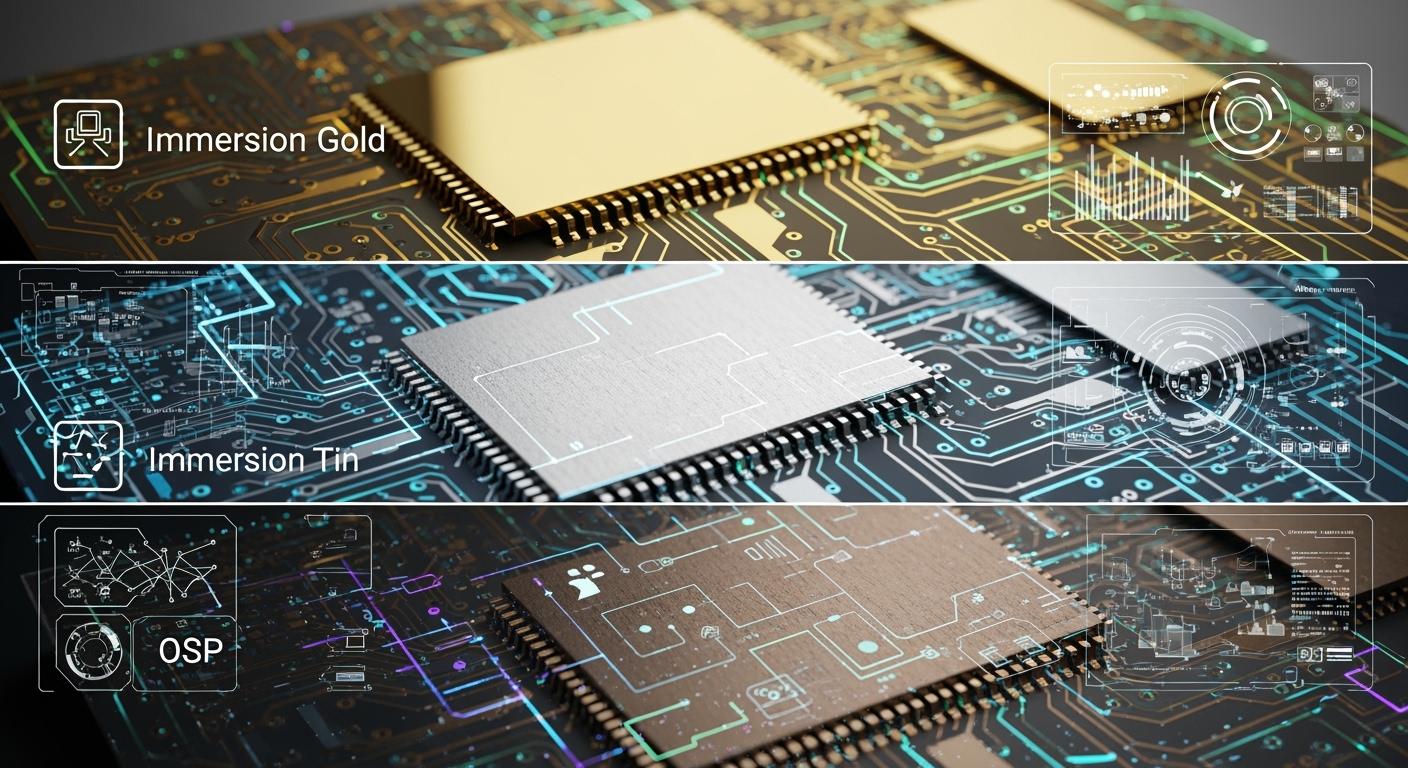
You need the surface treatment process to keep copper safe on a circuit board. This process makes a shield that stops water and heat from hurting the PCB. Immersion gold, immersion tin, and OSP are common pcb surface finishes. They help solder stick better and keep the board working well. These surface finish types make the board better and help put it together faster and with fewer mistakes.
Surface finishing does three big things to help PCBs last: It protects from water and heat that can cause rust. It gives a smooth surface for strong solder bonds. It also stops rust and damage that can hurt the board over time.
The type of surface treatment you pick changes how easy and reliable assembly is. ENIG is good for small parts. OSP is better for the environment. Immersion tin has good electrical features but does not last long.
Key Takeaways
Surface treatments like immersion gold, immersion tin, and OSP keep copper on PCBs safe from rust and harm. This helps the PCB last longer and work well.
Pick immersion gold (ENIG) if you need strong reliability in tough places. Immersion tin costs less and works well for normal electronics.
OSP is the top eco-friendly choice. It uses water-based chemicals and does not use heavy metals. This makes it good for making many PCBs at once.
Think about how you will put the PCB together and where it will be used. This helps you pick the best surface finish for good performance and long life.
You should balance cost and how well it works. Spending more on a better finish can save money later because you will not need as many repairs.
Immersion Gold Surface Treatment in PCB
What is Immersion Gold?
Immersion gold helps protect copper on a pcb. People also call it ENIG. ENIG means Electroless Nickel Immersion Gold. This finish has two main layers. The first layer is nickel. The nickel covers the copper and stops rust. The second layer is gold. The gold sits on top and keeps nickel safe from air and water. ENIG gives a flat and shiny surface. This makes it easy to solder parts. It works well for small parts and thin lines.
Immersion Gold Process Steps
First, you clean the pcb. Then you add the nickel layer. This layer forms by a chemical reaction. It does not need electricity. The nickel covers the copper and acts as a shield. Next, you dip the board in a gold solution. The gold swaps places with some nickel atoms. This makes a thin and even gold layer on top. Sometimes, a thin palladium layer goes between nickel and gold. This helps the finish work better.
ENIG gives a smooth and flat finish. This helps soldering and keeps the board safe from rust.
Here is a table that shows the structure and thickness of each layer:
Layer | Properties | Chemical Composition | Typical Thickness Range |
|---|---|---|---|
Gold | Stops rust, helps solder stick, looks nice | 99.9%+ high-purity gold | 0.03 - 0.05 µm |
Palladium | Stops nickel mixing, helps solder, resists rust | Pure Palladium | 0.005 - 0.015 µm |
Nickel | Stops rust, wears well, smooth surface, shields copper | 7-11% Phosphorus, 89-93% Nickel | 3 - 6 µm |
Immersion Gold Pros & Cons
ENIG has many good points, but there are some bad ones too. Here is a table to help you compare:
Advantages | Disadvantages |
|---|---|
Flat surface for easy soldering | Costs more than OSP or HASL |
Lead-free and RoHS safe | Can get "black pad" problems that hurt solder joints |
Lasts a long time | Nickel layer can crack from heat shock |
Good for small parts and thin lines | Hard to fix or redo |
Great at stopping rust | Not best for high-current uses |
Immersion Gold Applications
You use immersion gold when you need things to work well for a long time. ENIG is good in airplanes because it handles heat and height changes. It is used in medical devices because it lasts long and stays safe. ENIG is also in telecommunications, like 5G systems, because it keeps connections strong. You pick ENIG when you want strong rust protection, a flat surface, and even thickness.
Immersion Tin Surface Treatment
What is Immersion Tin?
Immersion tin is a way to protect copper on a pcb. It puts a thin layer of tin over the copper. This tin layer stops copper from rusting. It also helps solder stick better. Immersion tin does not have lead, so it is safe for people and nature. The surface is flat and even. This is good for small parts and new electronics.
Immersion Tin Process Steps
First, you clean the pcb with acid. This step takes off dirt and gets copper ready. Next, you dip the board in a special liquid. In this liquid, tin ions swap places with copper atoms. This makes a thin and even tin layer. The layer is about 0.8 to 1.2 micrometers thick. The tin keeps copper safe and helps with soldering.
Tip: Be gentle with boards that have immersion tin. The tin layer is soft and can scratch fast.
Immersion Tin Pros & Cons
Immersion tin has many good points, but also some bad ones.
Benefit or Limitation | Description |
|---|---|
Enhanced Solderability | Solder joints are strong and connections work well. |
Flat Surface | It is good for small parts and surface-mount technology. |
Lead-Free and RoHS Safe | Immersion tin is safe for people and the earth. |
Cost-Effective | It is a cheap choice for making many pcbs. |
Short Shelf Life | You must use boards in 6-12 months or there may be issues. |
Sensitive to Handling | The tin can scratch or get dirty, which hurts soldering. |
Tin Whisker Risk | Tiny spikes can grow and cause short circuits sometimes. |
Not for Multiple Reflows | The finish may not last if you heat the pcb many times. |
Immersion Tin Applications
You can use immersion tin for many pcb projects. It is good for making many boards because it saves money. Many companies use it for electronics, computers, and phones. If you need a flat surface and easy soldering, immersion tin works well. But do not use it for boards that must last a long time. The tin can make whiskers and does not last as long as other finishes.
OSP Surface Treatment Process
What is OSP?
OSP protects copper on a pcb. OSP means Organic Solderability Preservative. It uses organic compounds from the azole family. These include benzotriazoles and imidazoles. The compounds make a thin, water-based layer on copper. This layer stops copper from rusting. It keeps copper safe from water and heat. OSP gives a flat surface for easy soldering. It does not use heavy metals, so it is good for the environment.
OSP makes a shield that keeps copper shiny and ready to use. The finish meets safety rules around the world.
OSP Process Steps
First, you clean the pcb to remove dirt and oil. Then, you dip the board in a water-based OSP solution. Azole compounds stick to copper and form a thin film. The film is about 0.20 to 0.50 micrometers thick. The layer stops rust and helps solder stick well. You can remove and add OSP again if needed. This makes fixing boards easy.
OSP makes a protective layer with coordination bonding.
The process uses simple tools and makes less chemical waste.
OSP Pros & Cons
OSP has good and bad points. Here is a table to compare:
Strengths | Weaknesses |
|---|---|
Flattest surface: <1μm variation | Short shelf life: 6 months maximum |
Lowest cost: $0.05-0.15/dm² | Limited reflow cycles |
Lead-free: No heavy metals | Humidity sensitive: Performance degrades rapidly above 60% RH |
Simple process: Minimal equipment | Difficult to verify coating presence/integrity |
Re-workable: Can strip and re-coat | ICT probe issues: Coating can interfere with test probe contact |
OSP gives a flat surface and costs less money.
The layer is weak and can rub off when handled.
You must use the pcb in 6-12 months or soldering gets harder.
OSP is not good for boards with many soldering steps.
OSP Applications
OSP is used in electronics made in large numbers. Phones, tablets, and computers often use OSP. It works well for fast production and small budgets. OSP is good for HDI layouts with tiny parts and lines. You pick OSP for a simple, earth-friendly finish. OSP helps follow environmental rules and keeps copper safe during assembly.
Tip: OSP works best for boards with one or two sides and few soldering steps.
Here is a table showing environmental impact:
Surface Finish | Environmental Impact | Chemical Waste and Water Usage |
|---|---|---|
OSP | Good for the earth, avoids heavy metals, meets global standards | Lower because the process is simple |
Immersion Gold (ENIG) | Medium impact because the process is complex and makes more waste | Higher because the process is complex |
Immersion Tin | Medium impact, uses safe chemicals, but still more than OSP | Moderate, less than ENIG |
Comparison of PCB Surface Treatments
Process Differences
Each surface finish works in a different way. ENIG uses a more complicated chemical process. First, you add a nickel layer. Then, you put on a gold layer. This takes more time and has more steps. Immersion tin is not as complex. You clean the copper first. Then, you dip it in a tin solution. The tin changes places with copper atoms. This makes a thin tin layer. OSP is the easiest process. You clean the board and dip it in a water-based solution. The organic layer forms quickly. It does not use heavy metals.
Here is a table to help you compare the process steps and how hard they are:
Surface Treatment | Process Complexity | Material Properties | Suitability for Applications |
|---|---|---|---|
High | Thick nickel-gold layers, strong finish | Long-term use, harsh environments | |
Immersion Tin | Moderate | Thin tin layer, good solderability | Short-term use, careful handling |
OSP | Low | Thin organic layer, prevents oxidation | Cost-effective, quick manufacturing |
ENIG gives a strong and tough finish. Immersion tin helps with soldering but needs gentle care. OSP is fast and easy for making many boards.
Cost & Performance
You need to think about cost and how well the finish works. ENIG costs the most money. It gives the best protection and lasts the longest. Immersion tin costs less than ENIG but more than OSP. It is good for soldering and works for many things. OSP is the cheapest. It gives a flat finish but does not last as long.
Here is a table that shows the cost for each finish:
Surface Finish | Cost per m² |
|---|---|
OSP | $20–$35 |
Immersion Tin | $30–$50 |
ENIG (Immersion Gold) | $40–$70 |
Each finish works differently. ENIG gives a flat and shiny surface. It is good for small parts and thin lines. It makes strong solder joints and stops rust. Immersion tin gives a flat finish and strong soldering. It does not last as long and can grow tin whiskers. OSP gives the flattest finish. It is best for fast work and making lots of boards. It does not last long and needs to be stored with care.
Here is a table that compares how well each finish solders and lasts:
Finish Type | Solderability Characteristics | Long-term Reliability Characteristics |
|---|---|---|
OSP | Cheap, easy to use, good for small circuits | Short shelf life, not good against rust, needs careful storage |
Immersion Tin | Good for soldering, used in cars, easy to fix | Good against rust, but tin whiskers can grow |
Immersion Gold | Flat surface, strong solder joints, good for small parts | Very reliable, but can get "black pad" and costs more |
Pick the finish that fits your needs. Choose ENIG for the best results. Pick OSP if you want to save money. Pick immersion tin if you want something in the middle.
Best-Use Scenarios
You should choose the right finish for your project. Each one is best for different things.
Pick ENIG if you need high reliability. It is used in medical devices, airplanes, and fancy electronics. It gives strong protection and works in hard places.
Pick immersion tin for car electronics and things people use every day. It is good for soldering and works for many uses. You must handle it gently.
Pick OSP for making lots of cheap electronics. It is fast and costs less. You see it in phones, tablets, and computers.
Here is a table to help you pick the best finish for your job:
Surface Finish | Best For | Notes |
|---|---|---|
ENIG | Medical, aerospace, high-reliability PCBs | Strongest protection, highest cost |
Immersion Tin | Automotive, consumer electronics | Good soldering, moderate cost |
OSP | High-volume, low-cost electronics | Fastest process, lowest cost |
Tip: Always pick the finish that matches what your product needs. Think about cost, how well it works, and how long you want it to last.
The right finish helps your PCB work better and last longer. You need to balance cost, how well it works, and how you will use the board.
Choosing the Right Surface Treatment Process
Key Selection Factors
You need to look at several important factors before you pick a surface treatment for your PCB. Each project has different needs. The right choice helps your board work well and last longer.
Here is a table that shows the main factors you should consider:
Factor | Description |
|---|---|
Assembly Process | You must match the finish with your soldering and assembly methods. This helps your board perform well. |
Environmental Conditions | Humidity, heat, and chemicals can change how long your finish lasts and how well it works. |
Cost | The price of the finish affects your total project cost. |
Electrical Performance | Each finish has different electrical properties. These can change how your board works and how reliable it is. |
You should also think about rules in your area. Many countries have laws that limit harmful chemicals in electronics. For example:
RoHS rules say you must use lead-free finishes.
REACH rules make you check and register chemicals in your process.
These rules help protect people and the environment.
If you follow these rules, you can sell your products in more places.
You also need to think about how your board will be used. If your board will face high heat or moisture, you need a finish that can handle tough conditions. If your board has tiny parts or needs very flat surfaces, you should pick a finish like ENIG or immersion silver. These finishes help you place parts accurately and make strong solder joints.
Tip: Always match your finish to your assembly process and the places where your board will be used.
Application & Budget Guidance
You must balance your needs and your budget when you choose a surface finish. Some finishes cost more but give better results. Others save money but may not last as long.
Here are some things to think about:
If you make many boards, you may want a finish that is cheap and works well in large batches. OSP is a good choice for this.
If you need your board to last a long time or work in hard places, you should spend more for a finish like ENIG.
If you use fine-pitch parts or need a flat surface, ENIG or immersion silver will help you avoid problems during assembly.
If your board will go through many heating steps, pick a finish that can handle heat, like ENIG. Avoid finishes that break down with heat, like OSP or immersion tin.
If you need to follow strict rules about chemicals, pick lead-free and eco-friendly finishes.
You can use this checklist to help you decide:
What is your project budget?
How many boards do you need?
Will your board face heat, moisture, or chemicals?
Do you need a flat surface for small parts?
What rules must you follow in your country?
Note: If you pick a finish that matches your needs, you will save money and avoid problems later.
Here is a simple guide to help you match your needs with the right finish:
Need or Situation | Best Finish Options | Why This Works |
|---|---|---|
High reliability, harsh conditions | ENIG, ENEPIG | Strong, flat, lasts long |
Low cost, high volume | OSP, HASL LF | Cheap, fast for many boards |
Fine-pitch or HDI boards | ENIG, Immersion Silver | Very flat, good for small parts |
Multiple reflows | ENIG | Handles heat well |
Eco-friendly, lead-free | OSP, ENIG, Immersion Tin | Meets safety rules, less harm to environment |
You should always balance cost with performance. If you pick the cheapest finish, you may have to fix more problems later. If you spend more now, you may save money in the long run because your boards will last longer and work better.
Tip: Think about how your board will be used and how much you can spend. The right finish will help your project succeed.
You now know that immersion gold, immersion tin, and OSP each have their own special benefits for PCB surface treatment. When you learn about these finishes, you can make better choices for your board.
You can make sure solder sticks well and your board lasts longer.
You can stop rust and save money by avoiding mistakes.
You can make your board work better and last more years.
Think about what your project needs, how much money you have, and how it affects the earth. Picking the right finish helps your board work well and meet the rules for any job.
FAQ
What is the main reason to use a surface finish on a PCB?
You use a surface finish to protect copper from rust and damage. It also helps solder stick better during assembly. This keeps your PCB working well for a long time.
Can you solder directly onto OSP, immersion tin, or immersion gold finishes?
Yes, you can solder directly onto all three finishes. Each one gives a smooth surface for soldering. You get strong and reliable joints with the right process.
How long can you store PCBs with OSP, immersion tin, or ENIG finishes?
OSP boards last about 6 months. Immersion tin boards last 6 to 12 months. ENIG boards can last over a year if you store them in a dry place.
Which finish is best for the environment?
OSP is the best choice for the environment. It uses water-based chemicals and does not have heavy metals. You help reduce pollution when you pick OSP.
See Also
Perfecting Tin Finishing Methods for PCB Design Mastery
Comparing ENIG and Other PCB Finishes: Immersion Gold's Advantages
How Tin Immersion Affects Solder Mask Stability in PCBs
Understanding OSP Finishing: Advantages and Best Practices in PCB Production
