High TG PCB: Heat Resistance for Harsh Environments
You use high TG PCBs when your electronics need to handle heat and tough places. These PCBs have special materials that help circuits stay safe in high heat, wet air, or strong chemicals. As things like 5G, IoT, and cars get bigger, more people want strong PCBs. High TG PCBs help your devices work well in hard situations.
Key Takeaways
High TG PCBs can handle high heat and tough places. This makes them great for electronics used in hard environments.
Picking the right high TG laminate is very important. You should choose materials with a glass transition temperature at least 20°C higher than your device's top temperature.
High TG PCBs help your devices last longer and work better. They make sure your devices stay strong and perform well in extreme conditions.
High TG PCB Fundamentals
What Is High TG PCB?
You need a tough circuit board for hard places. High tg pcb means high glass transition temperature printed circuit board. This kind of pcb uses special high tg laminates. These laminates can take more heat than regular boards. You often find high tg fr4 laminate in these boards. High tg fr4 works better when it is hot.
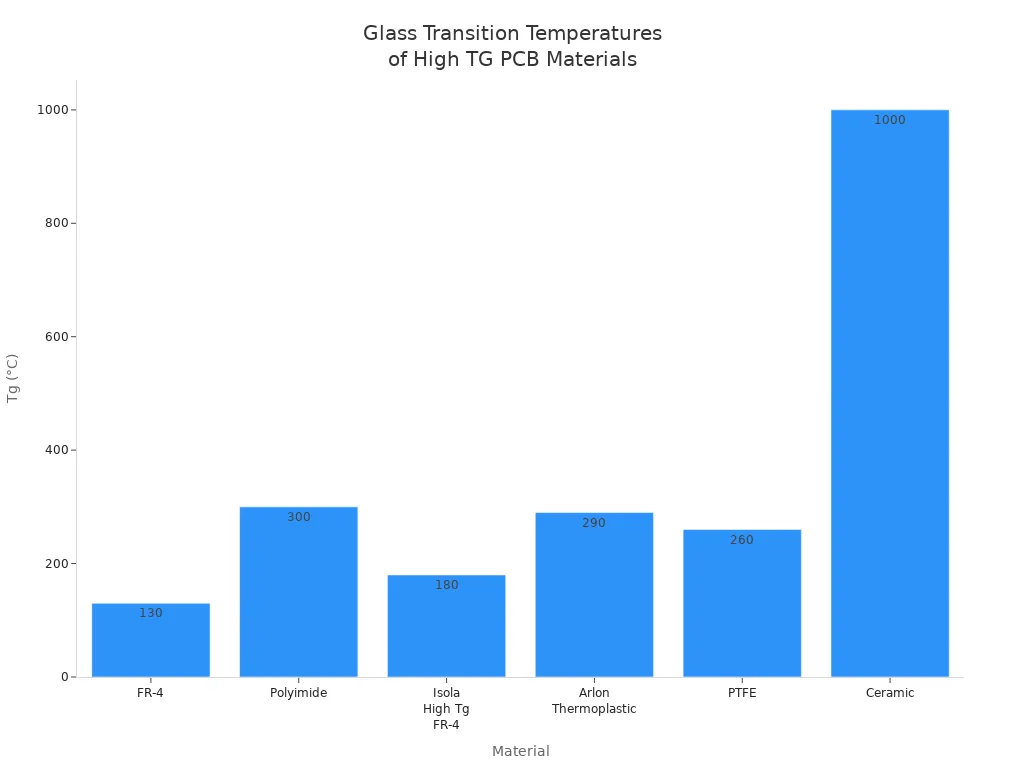
There are many high tg pcb materials you can pick. Each one has its own glass transition temperature and features. Check the table below to see how they are different:
Material | Glass Transition Temperature (Tg) | Key Properties |
|---|---|---|
FR-4 | ~130°C | Standard substrate, limited to low Tg ratings, suitable for up to 100°C. |
Polyimide | Up to 300°C | High thermal stability, excellent mechanical strength, and chemical resistance. |
Isola High Tg FR-4 | 150-180°C | Enhanced for moderate temperature resistance, lower cost than polyimide. |
Arlon Thermoplastic | Up to 290°C | Maintains strength and properties at high temperatures, budget-friendly. |
PTFE | Over 260°C | High dielectric strength, excellent thermal stability, most expensive option. |
Ceramic | Up to 1000°C | Ultimate thermal solution, brittle, costly, for extreme thermal requirements. |
You see high tg fr4 laminate in lots of industrial pcbs. It gives you good value and works well. Polyimide and ceramic are best for very high heat, but they cost more.
Glass Transition Temperature Explained
Glass transition temperature is when the laminate goes from hard to soft. You measure this in degrees Celsius. High tg pcb materials have a glass transition temperature over 170°C. Regular pcbs use materials with a lower Tg, usually 130°C to 140°C.
Type of PCB | Glass Transition Temperature (Tg) |
|---|---|
High Tg | 150°C to 170°C |
Standard | 130°C to 140°C |
When you use high tg laminates, your pcb stays strong when hot. Below the glass transition temperature, the laminate is stiff. Above Tg, it can bend or change shape. High tg fr4 laminate helps your board not warp or crack when made or used.
Glass transition temperature changes how stiff, bendy, and heat-safe the board is.
Higher Tg means less warping and a stronger pcb.
Below Tg, materials are hard. Above Tg, they get bendy.
You want high tg pcb materials for things that get hot, shake, or touch chemicals. High tg laminates also help your board last longer and work better in tough places.
Why Heat Resistance Matters
Heat resistance is important for making your pcbs last. High tg pcb gives you better thermal stability than regular boards. You avoid problems like warping, layers coming apart, and cracking. High tg fr4 laminate keeps your board strong when it heats and cools many times.
Feature | High TG PCBs | Standard PCBs |
|---|---|---|
Glass Transition Temp (TG) | Over 170 °C | About 130 °C |
Heat Resistance | Superior performance | Limited heat resistance |
Thermal Expansion | Less expansion | More prone to bending |
Durability | High temperature durability | Lower durability |
High tg pcb keeps its shape and works well when hot.
Regular pcbs can bend or break when they get hot.
High tg laminates do not expand much and are very strong.
Tip: Use high tg fr4 laminate for power electronics, cars, and factory machines. You stop hot spots, make parts last longer, and keep signals clear.
You also need to watch for common ways high tg pcb can fail. These include layers coming apart, warping, barrel cracking, and losing insulation. Picking the right high tg laminates and designing your pcb well helps you stop these problems.
Failure Mode | Description |
|---|---|
Delamination between layers | Separation of layers due to thermal stress. |
Z-axis expansion causing barrel cracking | Expansion in the Z-axis leading to cracks in plated through-holes. |
Warping and dimensional instability | Changes in shape affecting the alignment of components. |
Deterioration of electrical insulation | Loss of insulation properties due to high temperatures. |
Mechanical failure | Includes delamination, warping, and barrel cracking. |
Electrical failure | Results in degraded insulation resistance and potential short circuits. |
Component displacement | Movement of components as the substrate softens. |
Reduced lifespan | Accelerated aging and degradation of the PCB due to high temperatures. |
You can make heat resistance better by using thicker copper, thermal vias, and heat sinks. High tg pcb materials help your board live longer in tough places and keep your devices working.
High TG PCB Applications and Selection
Where High TG PCBs Are Used
You see high tg pcb in many different industries. These boards are best when heat, shaking, or chemicals can hurt normal electronics. The table below shows where high tg fr4 and high tg laminates are used most:
Industry | Specific Requirements |
|---|---|
Automotive | Stability in harsh conditions, preventing failures in systems like ECUs and BMS. |
Aerospace and Defense | Durability in extreme temperatures and vibrations for mission-critical operations. |
LED Lighting | Ability to handle high-power heat to maintain performance and extend lifespan. |
Telecommunications | Support for high-density systems, ensuring reliable signal transmission in extreme climates. |
Industrial Equipment | Robust performance in high temperatures and mechanical stress to prevent production halts. |
In cars and planes, you use high tg fr4 laminate for engine controls, radar, and avionics. Factories use high tg pcb for motor controllers and power supplies. These boards help your electronics last longer in very hot places.
Key Selection Factors
When you pick high tg pcb materials, you need to think about a few things. Make sure the glass transition temperature is at least 20°C higher than your device’s hottest temperature. Look at the decomposition temperature and how much the board grows when heated. High tg fr4 laminate gives you good electrical insulation and dielectric properties. If your pcbs touch chemicals, choose high tg laminates that resist chemicals well. Polyimide and ceramic laminates are best for thermal shock but cost more. Always balance price, strength, and how well it works.
Tip: High tg fr4 is good for most electronics, but use PTFE or ceramic for the hardest jobs.
Best Practices for Use
To get the most from your high tg pcb, follow these steps: 1. Pick high tg laminates that fit your heat and chemical needs. 2. Use heat sinks and thermal vias to move heat away from important parts. 3. Add strong mounting holes and thicker traces for shaking. 4. Put on conformal coating to stop water and help insulation. 5. Test your pcbs with heat and electrical checks to make sure they work.
You should also use high tg fr4 laminate for lead-free soldering and many reflow cycles. This helps your electronics work in tough places and keeps your pcbs safe from breaking.
High TG PCBs make your system last longer and work better. These boards are helpful in many areas:
Medical devices: let you make smaller tools and add cool features.
Industrial power: help stop machines from breaking and save time.
Telecom: make signals stronger and clearer.
Feature | Standard PCB | High Tg PCB |
|---|---|---|
Cost | Cheaper at first | Costs more, but saves money in tough places |
Pick the best materials and follow good steps for what you need.
FAQ
What does "High TG" mean for a PCB?
"High TG" means your PCB can handle higher temperatures. TG stands for glass transition temperature. You get better heat resistance and durability.
Can you use High TG PCBs for lead-free soldering?
Yes, you can. High TG PCBs resist heat from lead-free soldering. You avoid warping and layer separation during assembly.
How do you choose the right High TG material?
Need | Material |
|---|---|
High heat | Polyimide, PTFE |
Good value | High TG FR-4 |
Extreme cases | Ceramic |
See Also
Enhanced Performance of High TG FR4 PCBs in Extreme Heat
Key Considerations for PCB Production in Tough Industrial Settings
The Advantages of Ceramic PCBs for Effective Heat Management
Comprehensive Guide to Manufacturing Heavy Copper Multilayer PCBs
