Rogers PCB for High-Speed Signal Transmission
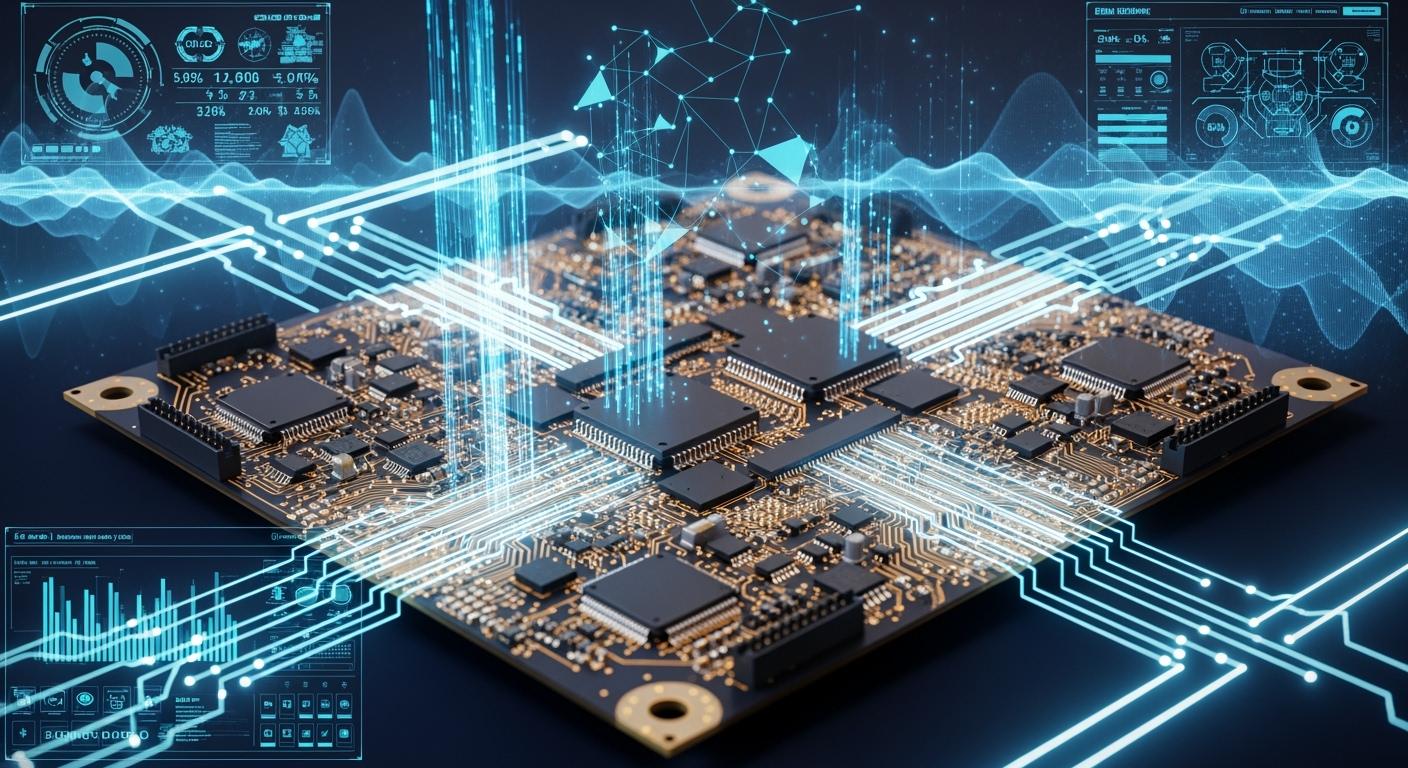
You need strong materials for high-speed signal transmission in new electronics. Rogers PCB materials help you fix problems in high-frequency communication and 5G systems. These materials provide many important benefits:
They maintain a steady dielectric constant and low loss tangent, ensuring your signals remain clear and accurate.
They reduce crosstalk, which means less unwanted noise between traces on your PCB.
They are durable in harsh environments, making them an excellent choice for challenging conditions.
Key Takeaways
Rogers PCB materials keep signals strong and clear. They have low loss tangent and steady dielectric constant. This makes them good for fast electronics.
These materials help stop crosstalk. This lets signals stay clear. It also helps devices work better in complex systems.
Rogers PCBs last a long time and are dependable. They work well in tough places like aerospace and defense. They stay stable in hard conditions.
Picking Rogers PCB materials can save money over time. They cut down on signal loss and lower maintenance costs in high-frequency uses.
For best results in 5G and microwave designs, use Rogers PCB materials. They help control heat and keep impedance steady.
Rogers PCB Materials Overview
What Makes Rogers PCB Unique
You must pick the right materials for your pcb if you want fast signals. Rogers pcb materials are special because they help your device work well. These materials have a low loss tangent, so signals do not fade much. They also have a steady dielectric constant, which keeps signals strong at high speeds.
Here are the main types of Rogers pcb materials and how people use them:
Material Type | Description | Typical Applications |
|---|---|---|
Rogers 3000 Series | Ceramic-filled PTFE materials with low loss tangent and higher dielectric constant. | Antennas, radar systems, microwave components. |
Rogers 4000 Series | Hydrocarbon-ceramic laminates with low-loss tangent and low dielectric constant. | Power amplifiers, wireless communication. |
RT/Duroid Series | Advanced laminates for ultra-high frequencies with extremely low loss tangent. | Satellite communications. |
Rogers TMM Series | Thermoset laminates reinforced with ceramic fibers for excellent thermal performance. | Various high-speed applications requiring stability. |
You can use Rogers pcb materials in many places. These include 5G wireless communication, car radar, space and defense, medical devices, and big data centers.
Tip: Rogers pcb materials help you stop crosstalk and keep signals clear, even when things get tough.
Material Properties for High-Speed Signal Transmission
You need to know why Rogers pcb materials are good for fast signals. These materials have low dielectric loss, so signals stay strong and clear. Rogers 4350b is a favorite because it has low dissipation factor and steady electrical properties.
Here is a chart showing dielectric constant and dissipation factor:
Material | Dissipation Factor | |
|---|---|---|
FR-4 | 4.5 | 0.02% |
Rogers | 2.2-12.85 | 0.004% |
Rogers 4350b has a dissipation factor of 0.0037, which is much lower than regular pcb materials. You get high thermal conductivity, so your pcb stays safe when it gets hot. Rogers pcb materials have a uniform structure, so they work the same everywhere. You also get a low coefficient of thermal expansion, which keeps copper traces safe when temperatures change.
When you use Rogers pcb materials, you keep your signals strong by lowering signal loss and impedance changes. These features make them great for systems that need accuracy and dependability.
Advantages for High-Speed Signal Transmission
Signal Integrity and Low Loss
You want your pcb to work well with fast signals. Rogers pcb materials help keep your signals strong and clear. They do this by lowering signal loss and stopping crosstalk. These materials are great for high-frequency communication and microwave pcb uses.
Rogers pcb materials have a steady dielectric constant and low loss tangent. These features help your signals stay clear, even above 10 GHz.
Rogers 4350b and other Rogers pcb materials lose less energy as heat than FR-4. This means your signals stay strong and do not fade.
The dielectric constant does not change much in different conditions. This gives you steady impedance and less signal loss.
Low dielectric loss lets signals go farther without getting weak. This is important for fast designs that need good signal quality.
Note: Rogers pcb materials help keep your signals strong in high-frequency uses. They stop problems like signal loss and crosstalk that can hurt your pcb.
Impedance Control and Stability
You need exact impedance control for fast signals. Rogers pcb materials give you this control because their properties stay the same at many frequencies. Rogers 4350b is a top pick for 5g and microwave systems because it keeps electrical properties steady.
Rogers pcb materials have many dielectric constant values, from 2.55 to 10. You can match impedance for your design.
A steady dielectric constant helps stop crosstalk. Your pcb works well and stays reliable.
Impedance stability makes sure signals act the same at different frequencies. This is very important for high-frequency communication and 5g networks.
You can trust Rogers pcb materials for exact impedance control. Your pcb will work well and keep signals strong, even in tough places.
Performance in Harsh Environments
You want your pcb to work in hard places. Rogers pcb materials help your pcb stay strong and keep signals clear in tough spots like aerospace, factories, and microwave uses.
Property | Impact on Performance |
|---|---|
Thermal Conductivity | Helps get rid of heat, so your pcb does not get too hot. |
Dimensional Stability | Keeps its shape in different conditions, so it works the same. |
Mechanical Strength | Stays strong when handled or used. |
Chemical Resistance | Fights off water and chemicals in tough places. |
Signal Integrity | Low loss tangent keeps signals clear at high speeds. |
Impedance Control | Lets you control impedance, so power moves well. |
Overall Performance | Good heat control and strength make your pcb last longer. |
Rogers pcb materials keep their shape and strength in hot or wet places. They do not get damaged by water or chemicals, so your pcb stays safe. These features make Rogers pcb materials a great choice for fast signals in 5g, microwave, and other high-frequency uses.
Tip: Pick Rogers pcb materials for your next pcb if you need exact impedance control, strong performance, and reliability in tough places.
Rogers PCB vs. FR4 in High-Frequency Communication
Electrical Performance Comparison
It is important to see how Rogers PCB and FR4 are different for high-frequency communication. Rogers PCB materials keep electrical properties steady, especially when used for high-frequency jobs. FR4 can make signals weak and cause crosstalk, which hurts how clear your signals are. Rogers 4350b keeps the dielectric constant the same, so signals stay strong. FR4’s dielectric constant changes at different speeds, which causes more signal loss.
Feature | FR4 | Rogers |
|---|---|---|
Dielectric Constant | High and inconsistent across frequencies | Stable even at high frequencies |
Signal Degradation | Significant at high frequencies | Minimal, maintains signal integrity |
Dielectric Loss | High, leading to increased signal attenuation | Low, ensuring better performance |
Recommended Frequency Range | Low-to-medium frequencies | High frequencies (GHz and above) |
Rogers PCB materials have lower dielectric constants, which help keep signals clear in microwave PCB jobs. FR4’s higher dielectric constant can slow signals down and make them weaker.
Impact on PCB Design and Manufacturing
You should think about how your choice changes PCB design and making. Rogers PCB materials use special stuff like PTFE and ceramic-filled mixes. These materials give better electrical performance and less signal loss. Rogers 4350b works well for complex multilayer designs and keeps signals steady. FR4 is good for simple designs but makes it harder to control impedance.
Property | Rogers PCB | FR4 |
|---|---|---|
Dielectric Constant | Lower, ensuring reliable signal integrity | Variable, can complicate designs |
Loss Tangent | Lower, ideal for high-frequency applications | Higher, leading to more signal loss |
Thermal Management | Enhanced, prevents overheating | Standard, less effective |
Design Complexity | Supports complex multilayer designs | Simpler, but less precise |
Application Suitability | Advanced applications (5G, IoT) | General use, less demanding |
Rogers PCB materials have tighter impedance tolerance, so signals stay steady. FR4 can be hard to predict, especially for high-frequency communication.
Cost and Application Considerations
You need to think about both cost and how well things work. FR4 is much cheaper than Rogers PCB materials. FR4 costs between $0.50 and $1.50 for each square inch. Rogers PCB materials start at $5 per square inch and can be more than $15 for special types. Rogers 4350b costs more, but you get better reliability and fewer signal problems for high-frequency uses.
Even though Rogers PCB materials cost more, you can save money later. You avoid signal loss and get better reliability, which is important for 5G, microwave, and other advanced uses. Rogers PCB materials are best for high-frequency signals, important signal quality, and tough places like aerospace or outdoor electronics.
Tip: Pick Rogers PCB materials if you need strong signals, good reliability, and great performance for high-frequency communication.
Design Considerations for 5G and High-Speed PCB
Material Selection and Stack-Up
When you design for fast signals, you need the right materials. Rogers pcb materials have a low loss tangent and a steady dielectric constant. These help keep signal loss low and make your pcb work well in 5g and microwave uses. You should check the dielectric constant and dissipation factor. Lower numbers make it easier to route and keep signals clear.
A good stack-up is very important. Rogers 4350b and other high-frequency laminates stay stable in every layer. You can use the right layer setup and grounding to control impedance. This helps stop reflections and keeps signals strong. Special simulation tools let you see signal paths and fix problems before you build your pcb.
Tip: Always look at thermal management and high thermal conductivity. This helps your pcb handle heat in high-frequency jobs.
Manufacturing Challenges
You may have some problems when making a pcb with Rogers materials. These materials can take in water, which can cause layers to come apart. You might also see copper peel off or rough holes after drilling. The table below shows common problems:
Challenge | Description |
|---|---|
Delamination | Layers come apart because of water vapor. |
Adhesion Issues | Copper peels if the surface is not ready. |
Drilling Issues | Hard fillers can make rough holes and smear when drilling. |
To fix these problems, keep panels in sealed bags with low moisture. Bake panels before pressing to get rid of water. Use a vacuum press and clean the surface before you glue layers. For drilling, CO2 or UV lasers work better and protect the material.
ROI and Cost Factors
You may see that Rogers pcb materials cost more than regular ones. The table below shows costs and savings over five years:
Parameter | Traditional PCB | Rogers RT Duroid 5880 |
|---|---|---|
Initial Material Cost | Lower | Higher |
Downtime Cost (Annually) | $40,000 | $8,000 |
Maintenance Costs | Higher | Lower |
Total ROI (5 Years) | $160,000 | $120,000 |
Rogers materials cost $5.00 to $20.00 for each square inch. This is more than FR-4, but you get better reliability and less downtime. You save money on repairs and avoid signal loss in fast signal jobs. These benefits make Rogers materials a smart pick for 5g, microwave, and other high-frequency uses.
Applications in 5G and High-Frequency Communication
Telecommunications and Networking
Rogers pcb materials are used in many telecom and 5g systems. These materials help make antennas and RF modules. They send signals fast and clear. Rogers RO4000 series is good for 5G because it keeps signal loss low. It works with many frequencies. You get better power amplifiers, filters, and phase controllers. Rogers pcb materials help your equipment stay stable when temperatures change.
Rogers pcb materials give low loss and strong dielectric properties. Your signals go farther and stay clear, even in busy networks.
Rogers Material Family | Common Applications |
|---|---|
RO4000 Series | Antennas, RF modules, 5G infrastructure |
RO3000 Series | Radar boards, satellite communication systems |
RT/duroid materials | Microwave circuits |
TC Series materials | High-speed circuit materials |
Aerospace, Defense, and Harsh Environments
You need reliable pcb materials for aerospace and defense jobs. Rogers 3003 pcb is used in special antennas and satellite parts. These materials work well in places with high vibration and radiation. They also work in low pressure. Rogers pcb materials keep their shape and electrical properties, even when things get tough. You can trust them in transceivers and other important systems.
You face extreme environmental conditions.
You deal with high vibration and radiation.
You must design for low atmospheric pressure.
Rogers pcb materials help you keep signal loss low and performance high in these hard jobs.
High-Speed Digital and Microwave Systems
You use Rogers pcb materials in high-speed digital and microwave pcb jobs. These materials have a stable dielectric and low loss tangent. Your signals stay strong. Rogers RT/duroid 5880 works above 20 GHz and keeps signal loss very low. You also get good thermal management. This helps your pcb last longer.
Property | Benefit to Reliability |
|---|---|
Stable dielectric | Ensures strong signal integrity |
Low loss tangent | Minimizes signal loss |
Effective thermal management | Keeps performance steady under different conditions |
Rogers pcb materials do not take in much moisture. They keep their shape under heat and stress. The z-axis expansion matches copper, so holes and solder joints stay safe. You get reliable performance in every high-speed system.
You want your printed circuit board to send clear signals. This is important for every high-speed communication device. Rogers PCB materials help make things smaller. They also meet needs in aerospace and defense. Look at the table below to see why experts pick Rogers:
Key Advantage | Description |
|---|---|
Minimal Signal Attenuation | Keeps signals strong for fast use. |
Superior Phase Stability | Needed for radar and advanced systems. |
Tight Dielectric Tolerances | Makes sure performance stays steady at high speeds. |
Thermal Stability | Stops detuning outside in hot or cold places. |
Low Moisture Uptake | Keeps working well in humid places. |
High Power Handling | Supports telecom and defense needs. |
Low Dissipation | Helps data move fast and smooth. |
Mechanical Reliability | Works well in tough environments. |
You will see more Rogers PCBs as electronics get smaller. You can trust these materials for future defense and fast communication projects.
FAQ
What makes Rogers PCB materials better for high-speed signals?
Rogers PCB materials have a steady dielectric constant and low loss tangent. These things help your signals stay strong and clear. They are good for fast and accurate communication.
Can you use Rogers PCB materials for 5G and microwave designs?
Yes! Rogers PCB materials work well for high-frequency designs. You can use them in 5G, microwave, and RF systems. They help your devices send signals fast and without problems.
Are Rogers PCB materials more expensive than FR4?
Material | Typical Cost (per sq. inch) |
|---|---|
FR4 | $0.50–$1.50 |
Rogers | $5.00–$20.00 |
Rogers PCB materials cost more than FR4. But you get better performance and more reliability.
How do Rogers PCB materials handle harsh environments?
Rogers PCB materials have strong thermal stability and chemical resistance. They keep their shape and electrical properties in hot, wet, or tough places. Your PCB stays safe and works well.
See Also
Exploring The Concept Of High-Speed Printed Circuit Boards
Top Materials Recommended For High-Speed PCB Fabrication
Key Features And Uses Of Rogers Materials In RFPCBs
Design Factors And Production Techniques For High Frequency PCBs
