High TG PCB for High-Power Electronic Devices
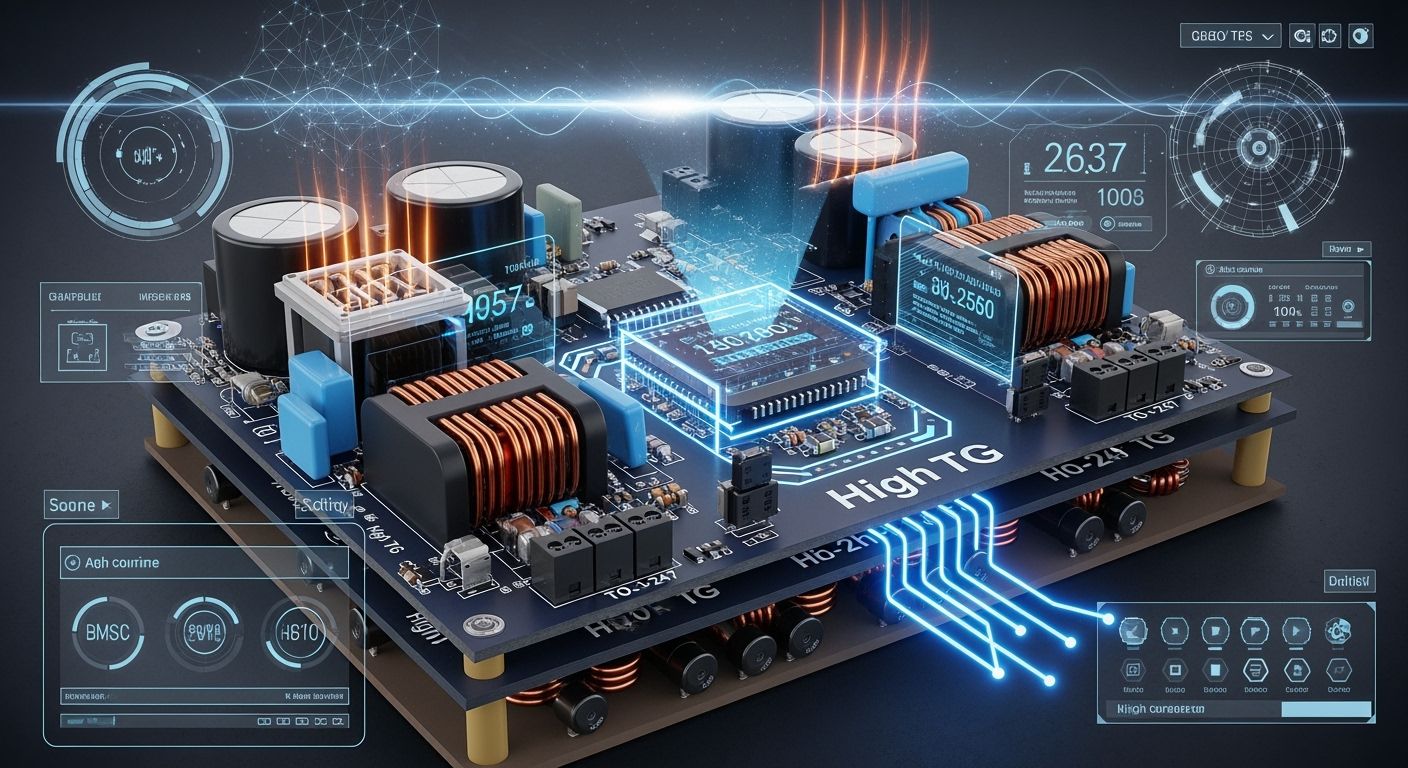
You need a high tg pcb when your device gets very hot or uses lots of power. High tg means the board can take more heat before the resin gets soft. Experts check this glass transition temperature with special tests. They look for changes in how stiff the board is as it heats up. Using a regular PCB in high-power places can cause trouble:
Low thermal conductivity and weak voltage strength
Damage from big parts and thick boards
Too much heat that harms parts
Danger of electric shock or sparks
High tg materials give better heat resistance, more reliability, and less bending when stressed. You get strong performance where it matters most.
Key Takeaways
High Tg PCBs can handle heat over 170°C. This makes them good for high-power electronics that get very hot.
Using high Tg materials makes devices more reliable. It also means you do not need to fix them as often. Devices last longer and break less.
High Tg PCBs stop problems like bending and cracking. This helps them work well in tough places like cars and airplanes.
Picking the right high Tg material is very important. You should think about things like how much it grows with heat and the temperature it will face. This helps match the material to your device.
Buying high Tg PCBs can help you save money over time. They cut down on repairs and make your electronics work better.
High TG PCB Overview
What Is High TG PCB
You pick a high tg pcb when your device gets very hot. High tg means the board can handle heat above 170°C. This board stays stable when it gets warm. It is strong and resists chemicals well. High tg pcbs are used in many places:
Automotive electronics, like engine control units
Aerospace and defense systems, such as satellites
Industrial machines that run all day and get hot
High-power electronics, including power converters and inverters
LED lighting that needs to manage heat well
Telecom equipment for stable networks
Medical devices that face different temperatures
Consumer electronics, like laptops and smartphones
Renewable energy systems, such as solar inverters
Electronic testing tools for changing temperatures
High-performance computers in data centers
Glass Transition Temperature Explained
Glass transition temperature is when the PCB goes from hard to soft. If you heat the board past this point, it can lose its shape and strength. Here is a table that shows the difference:
Type of PCB | Glass Transition Temperature (Tg) |
|---|---|
High Tg PCBs | 150°C to 170°C |
Standard PCBs | 130°C to 140°C |
If the board gets hotter than the glass transition temperature, it can bend or break. This can cause problems with parts and make the board expand too much.
Importance for High-Power Electronics
High tg is needed for high-power electronics because they make lots of heat. Glass transition temperature shows how much heat the board can take before it gets weak. If you use a board with low tg, it can bend or break. High tg pcbs resist heat and stay strong. They help the board stay together during assembly and use. High tg also stops the board from coming apart and helps with expansion. This matters for motor drivers, power inverters, and other high-power devices. You get better performance and fewer problems when you use high tg.
Key Properties of High-TG PCBs
Heat Resistance and Stability
Strong heat resistance is important for high-power electronics. High tg pcbs use materials that can handle over 170°C. This keeps the board solid and stops it from getting soft. The glass transition temperature is when the board might start to change. If you pick a board with high tg, your circuits are safer from heat damage.
High tg materials give better thermal resistance and stability. They help your board keep its size and shape for a long time. This matters for devices that get hot and run for hours.
Here is a table that shows how high tg pcbs are different from standard boards:
Property | High Tg PCBs | Standard PCBs (FR-4) |
|---|---|---|
Heat Resistance | Greater than 170 degrees | 130-140 degrees |
Mechanical Strength | Enhanced stability | Standard strength |
Dimensional Stability | Superior | Standard |
Thermal Management | Reliable heat dissipation | Limited thermal management |
Chemical Resistance | Improved resistance | Standard resistance |
High tg gives you better thermal stability. Your board will not bend or break as easily. You also lower the chance of signal drift and tiny cracks. These can cause trouble in your circuits. High tg pcbs last longer and keep your electrical performance steady, even when stressed.
Mechanical and Chemical Durability
You want your board to stay strong in tough places. High tg materials give better mechanical strength and chemical resistance. This is important for cars, planes, and machines that face heat, shaking, and chemicals.
Property | Description |
|---|---|
Thermal Stability | High tg materials keep their shape at high temperatures. |
Coefficient of Thermal Expansion | Lower expansion rates mean less stress and fewer cracks. |
Mechanical Strength | Strong boards resist breaking and peeling, even in harsh conditions. |
Operating Temperature Range | Boards work well at many temperatures, not just room temperature. |
Resistance to Thermal Cycling | Boards can handle quick changes in temperature without getting weak. |
High tg pcbs do not crack or peel easily.
They keep working even when the temperature changes fast.
You get better protection from chemicals, so your board does not wear out quickly.
In cars and planes, you need boards that can take shocks, heat, and chemicals. High tg gives you this extra strength.
Performance in High-Power Electronics
High tg works best in high-power electronics. These boards keep working when others fail. High tg stops problems like layers coming apart, bending, and cracking. It also helps prevent electrical failures, like short circuits and insulation breakdown.
Performance Aspect | High Tg PCBs | Standard PCBs |
|---|---|---|
Thermal Stability | Significant improvements | Limited thermal stability |
Mechanical Properties at High Temp | Maintains properties, reduces deformation | Risk of warping and failure |
Longevity and Reliability | Greater reliability and longevity | Shorter lifespan under heat |
Resistance to Thermal Expansion | Lower rate of expansion, more durable | Higher risk of cracking |
Adaptability to Temperature Changes | High toughness and adaptability | Less adaptable |
High tg pcbs help you avoid layers coming apart.
You lower the risk of barrel cracking in plated through-holes.
Your parts stay in place, even when the board gets hot.
You get longer life and better reliability for your high-power devices.
When you pick high tg, your electronics are safer and more reliable. You also spend less time fixing and waiting for repairs.
Benefits for High-Power Electronics
Reliability and Reduced Maintenance
You want your devices to work well. High tg pcbs help you reach this goal. These boards use materials that stay strong in heat. You get steady electrical performance and good strength. High tg materials stop your board from bending or breaking. This means you fix problems less and use your equipment more.
High tg materials keep your board steady in heat.
You see fewer problems in multilayer boards.
Lower expansion rates stop layers from moving.
Thermal resistance protects your board from heat damage.
High tg pcbs handle high temperatures without losing shape.
Mechanical stability helps your board last through assembly and heating.
High-tg pcbs are used in servers and telecom systems. They last longer and need less fixing. You save money and avoid downtime.
Enhanced Performance Under Thermal Stress
High tg lets your board handle lots of heat. You get better stability and less risk of bending or layers coming apart. High-tg pcbs use special materials that stay strong above 200°C. This matters for devices that heat up and cool down often.
Property | Description |
|---|---|
Low Z-axis CTE | Stops the board from bending or layers coming apart. |
High decomposition temperature | Keeps the board strong at very high heat. |
High Tg ratings | Much higher than standard boards for better heat stability. |
Good board design and smart heat control help you get the best from high tg. Special ways of making the board make it even stronger. Tests like heating and cooling show high-tg pcbs stay tough for a long time.
You get steady performance, even when your device heats up or cools fast. High tg keeps your board safe from heat and protects your circuits.
Application Examples (Motor Drivers, Power Supplies, Inverters)
You find high tg pcb in many high-power devices. These boards are needed for jobs that need strong heat resistance and strength.
Application Area | Description |
|---|---|
Industrial Machinery | High-tg pcbs give heat stability and strength for big machines. |
Automotive ECUs | Great for car parts under the hood, resisting heat and shaking. |
Aerospace Systems | Made for extreme heat, stopping layers from coming apart. |
High-Performance Computing | Complex pcbs for fast signal processing with little signal loss. |
Factory Automation | Special pcbs for busy control systems in factories. |
In power supplies and inverters, high tg pcbs stop failures that could hurt machines. These boards handle heating and cooling and keep their strength during hard work. For example, a thick copper pcb in a 200A power inverter worked 99.8% of the time. You see high tg in motor drivers, where heat control is key for long life.
High tg gives you confidence. Your devices last longer, work better, and need fewer repairs. You get strong protection from heat and stress in tough places.
High TG Materials and Design Considerations
Common High TG Materials
You can pick from many high tg materials. Each one has its own strengths for different jobs.
Epoxy Resin-Based FR4 stays strong in heat above 170°C.
Polyimide (PI) works well in very hot places and has good dielectric properties.
PTFE (Polytetrafluoroethylene) loses little energy and stays steady at high frequencies.
Ceramic-Filled Epoxy helps heat move away and is good for high-power uses.
Hybrid Materials (PTFE/FR4) mix PTFE and FR4 to make boards that are stable and cost less.
Bismaleimide-Triazine (BT) is very strong and stays solid in heat.
Some brands and grades, like IT180A, 370HR, IS410, FR408HR, Megtron 6, and Rogers 4350B, have different Tg ratings for special jobs.
Material Suitability for High-Power Devices
You need to pick the right high tg material for your device. Some materials work better in hotter or tougher places. Here is a table to help you compare:
Material Type | Max Operating Temp | Mechanical Strength (Tensile) |
|---|---|---|
FR4 (High Tg) | Above 170°C | Up to 415 MPa |
Rigid Polyimide | 300°C | 231 MPa at room temp |
Flexible Polyimide | Approx. 220°C | Lower than rigid FR4 |
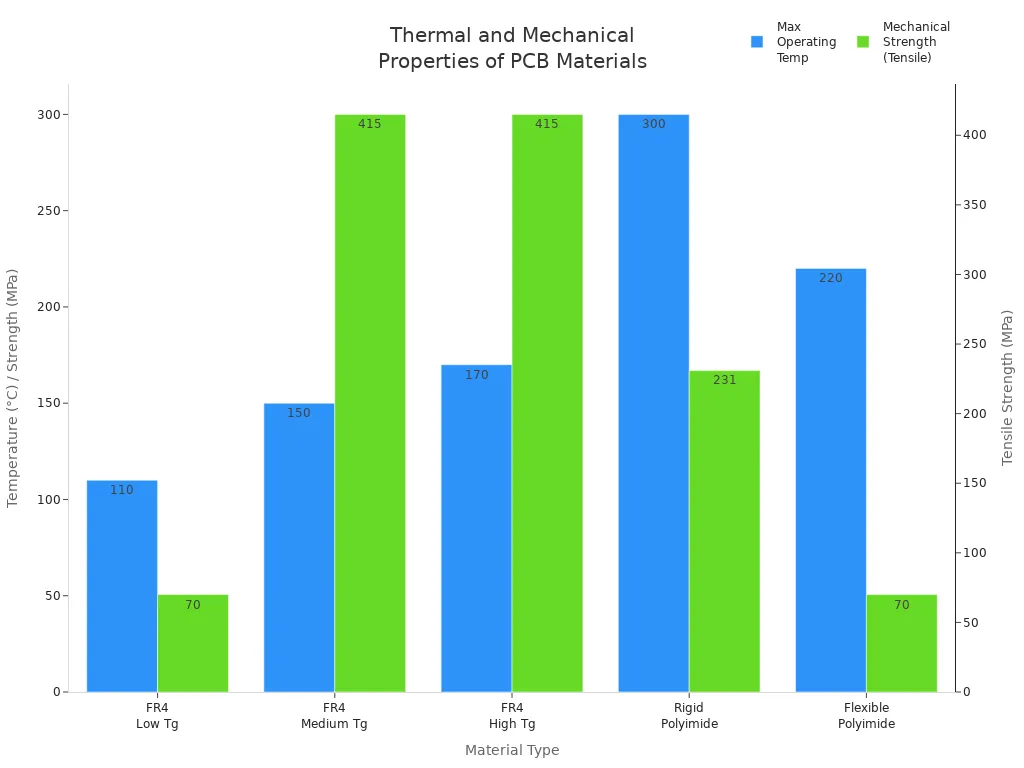
You should check a few things when picking high tg materials.
Criteria | Description |
|---|---|
Glass Transition Temperature (Tg) | Shows how much heat the material can take before it changes. |
Coefficient of Thermal Expansion | Lower values mean less risk of cracks during heating and cooling. |
Thermal Cycling Profiles | Tells you how well the material handles repeated temperature changes. |
Signal Integrity | Important for high-frequency circuits. |
Assembly Processes | Some materials need special handling during board assembly. |
Compliance with IPC Standards | Makes sure your board meets industry rules for performance. |
Environmental Factors | Includes humidity and vibration resistance. |
You get the best results when you match the material to your device’s power, heat, and environment needs.
Design Challenges and Trade-Offs
Designing with high tg materials can be tricky. You need to balance how well the board works, how much it costs, and how easy it is to make.
You must handle thermal stress, especially with high current.
Vias need to stay strong when heated or pushed.
Materials expand and shrink at different rates, so you must plan carefully.
Factor | High Tg Materials | FR-4 Materials | Performance Impact |
|---|---|---|---|
Cost | Higher | Lower | |
Performance | Excellent for high-power | Good for standard uses | |
Manufacturability | More complex | Easier |
Tip: You can use heat sinks, thermal vias, and thicker copper layers to help with heat. You should also check if your supply chain can deliver the materials you need.
You must balance electrical, thermal, and mechanical needs with your budget and production limits. High tg pcb design works best when you plan for these trade-offs early.
You need high Tg PCBs to keep electronics safe and reliable. Pick your material carefully for your device. Experts say your board should work at least 25°C below its Tg. Look at this table to help you choose:
Material Type | Recommended Tg Range | Application Context |
|---|---|---|
High Tg FR4 | 170°C - 180°C | General electronics |
Polyimide | N/A | Aerospace, extreme environments |
Standard FR4 | N/A | Low-heat logic boards |
Find out your device’s highest temperature.
Leave a safety gap of 20-30 degrees.
Choose materials with low CTE to stop bending.
Smart choices help your board last longer and need fewer fixes. Use high Tg PCBs for tough jobs that need strong boards.
FAQ
What does "high Tg" mean in PCB materials?
"High Tg" means the board can handle more heat before it gets soft. You see Tg as the glass transition temperature. High Tg PCBs stay strong above 170°C.
Why should you use high Tg PCBs in power devices?
You use high Tg PCBs because they resist heat and last longer. These boards protect your circuits from bending, cracking, and electrical failure.
Can you use standard PCBs for high-power electronics?
PCB Type | Heat Resistance | Reliability |
|---|---|---|
Standard PCB | Low | Low |
High Tg PCB | High | High |
You should not use standard PCBs. They fail in hot, high-power jobs.
How do you choose the right high Tg material?
You check your device’s highest temperature. You pick a material with Tg at least 20°C higher. You look for low expansion rates and strong mechanical properties.
Are high Tg PCBs harder to make?
High Tg PCBs need special handling. You may see higher costs and more steps in production. You get better performance and reliability in return.
See Also
Enhanced Performance of High TG FR4 Laminate PCBs
Understanding High-Speed PCBs and Their Applications
Top Materials for Designing Effective High-Speed PCBs
Creating High-Performance PCBs Tailored for LED Use
Comprehensive Guide to Heavy Copper Multilayer PCB Production
